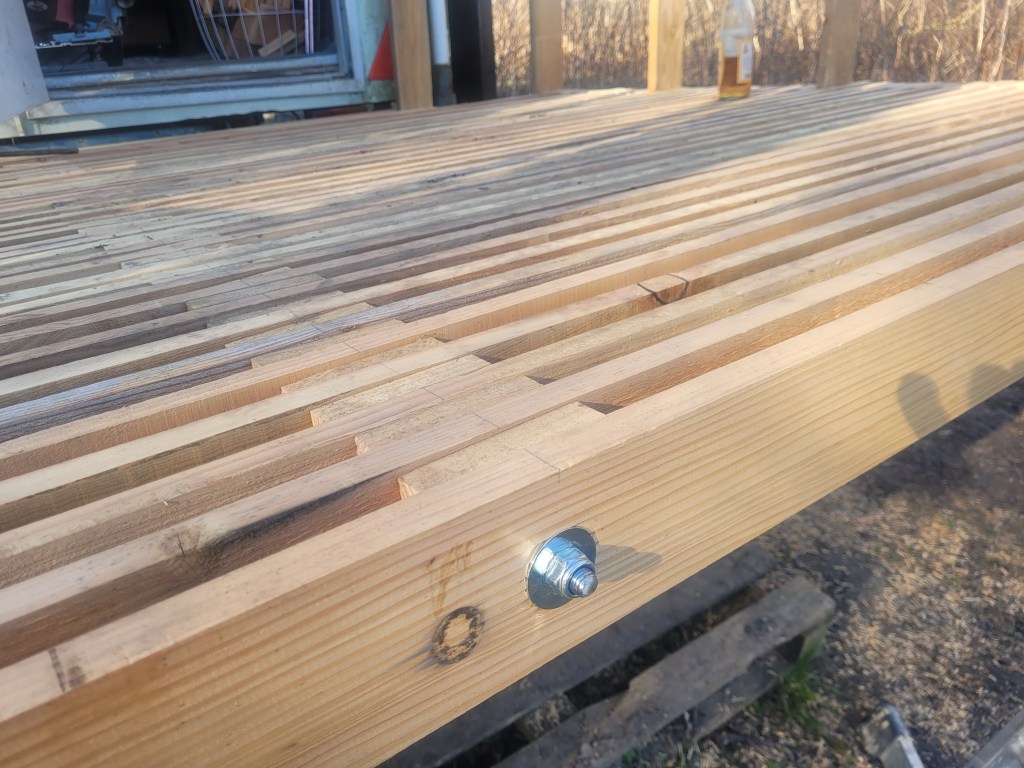
a threshold between shelter and open field
long story short:
Have built an airy, semi‑outdoor porch tucked beneath tall trees that opens the tiny house to the open landscape while keeping it private, sheltered and filled with soft, changing light.
Northern Germany · 2025 · self-initiated solo project
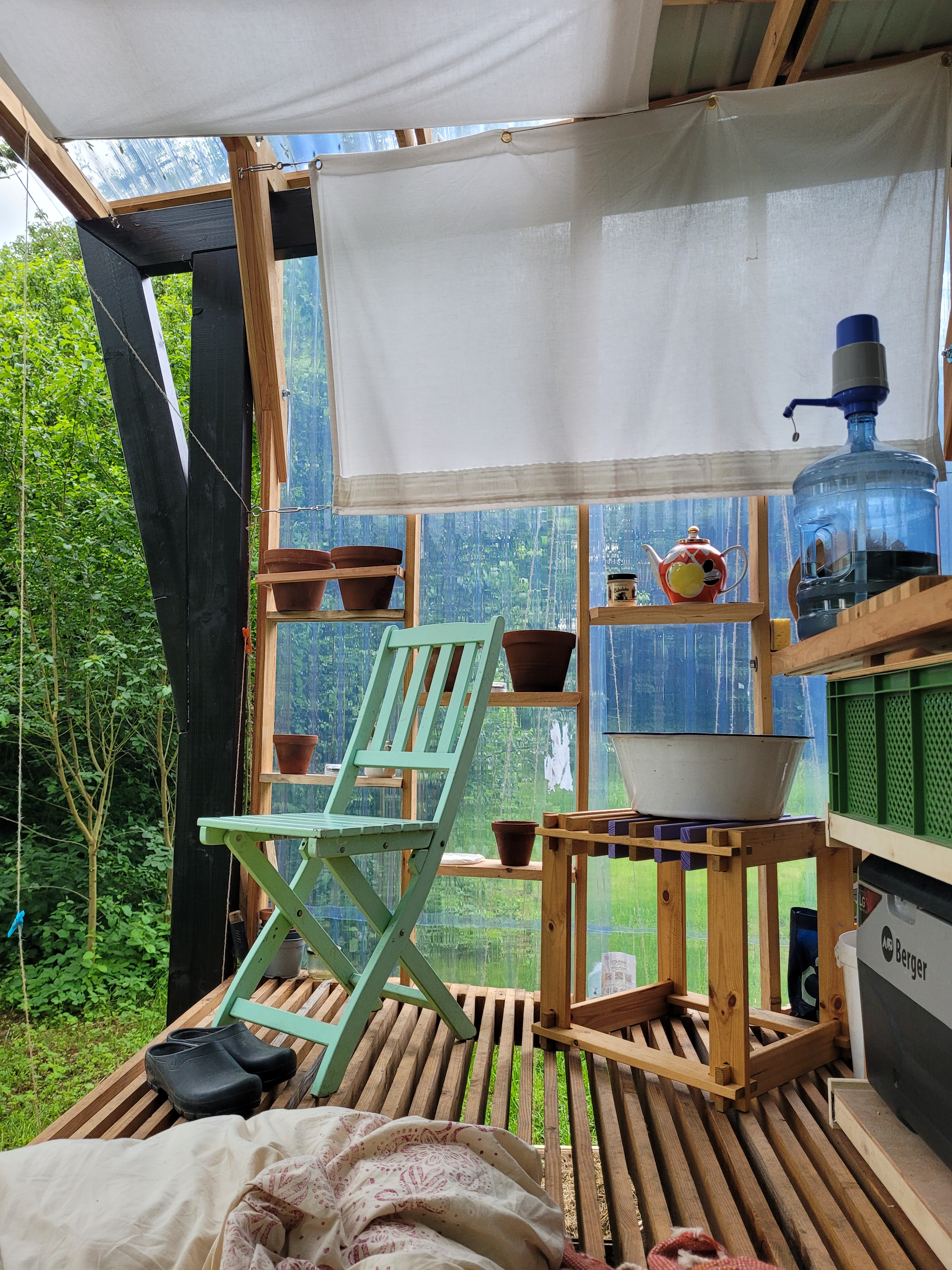
Project snapshot
Scope
- Design and build a light, semi‑outdoor porch as an extension of the tiny house
- Create a sheltered space for cooking, eating, working and resting close to the garden
Timeline
- Design development and planning: winter 2024–25
- Main build on site: March 2025, completed in 2 weeks
Materials
- Structural frame in 6 × 18 cm pine timber
- Floor and wall elements in 2 × 10 cm larch boards
- Translucent panels for roof
- 18 mm threaded rods for assembly
Budget
- Approx. 600 € for timber, metal connectors and translucent panels
- Labour entirely self‑built, keeping the overall budget very low
Constraints
- Need to protect privacy for both the tiny house and the neighbors
- Must bring in generous daylight while avoiding overheating in summer
- Minimal impact on the garden and tree roots, with a structure that can be adapted or dismantled if needed
Concept
This porch is conceived as a light, in‑between room that stretches daily life from the wagon out into the garden. Instead of enclosing the space, the structure works like a “hanging basket”: a simple timber frame that carries floor and railings, wrapped with narrow boards and translucent panels so light, views and privacy can all be tuned.
Design drivers
- Extend the inhabitable space of the wagon into the garden
- Create a dry outdoor area that still feels open and airy
- Bring in as much daylight as possible, even in winter
- Keep the structure light, simple and reversible on the site
- Work with cheap second-choice timber without hiding its imperfections
- Protect views toward the neighboring house while screening the landscape
Key moves
- Test the porch’s position and size with quick on-site mock-ups
- Define a simple structural grid based on available timber lengths
- Build the main timber frames and brace them to form the “hanging basket”
- Suspend floor and walls within this frame rather than resting them on the ground
- Wrap roof and house-facing side in translucent panels for soft, filtered light and privacy
Site & surroundings
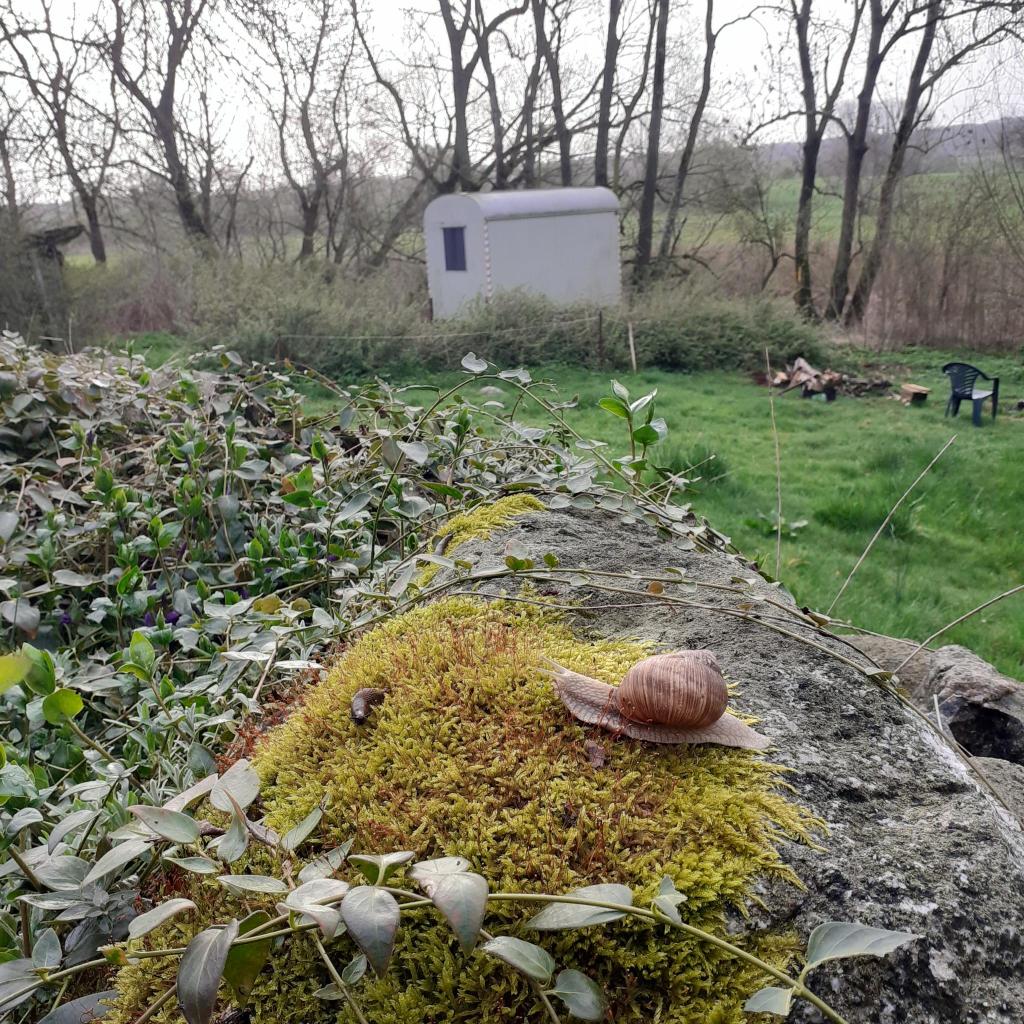
Tucked beneath trees behind a friend’s house in the northern German countryside, this spot is an ideal little sanctuary. The wagon’s entrance faces south across open fields, with cows sometimes drifting along the horizon. Positioned just beyond the house, the wagon turns completely away from it, with no windows or seating looking back. Instead, every opening is directed toward the endless greenery, creating an intimate retreat visually removed from everyday domestic life.
Challenges
- Balancing shade from the trees with enough daylight throughout the day.
- Integrating the porch with the existing wagon and garden without feeling cramped
Opportunities
- Filtered light through the trees creates a soft, dappled atmosphere on the porch
- Framed views into the garden, treetops and sky, while hiding less attractive surroundings
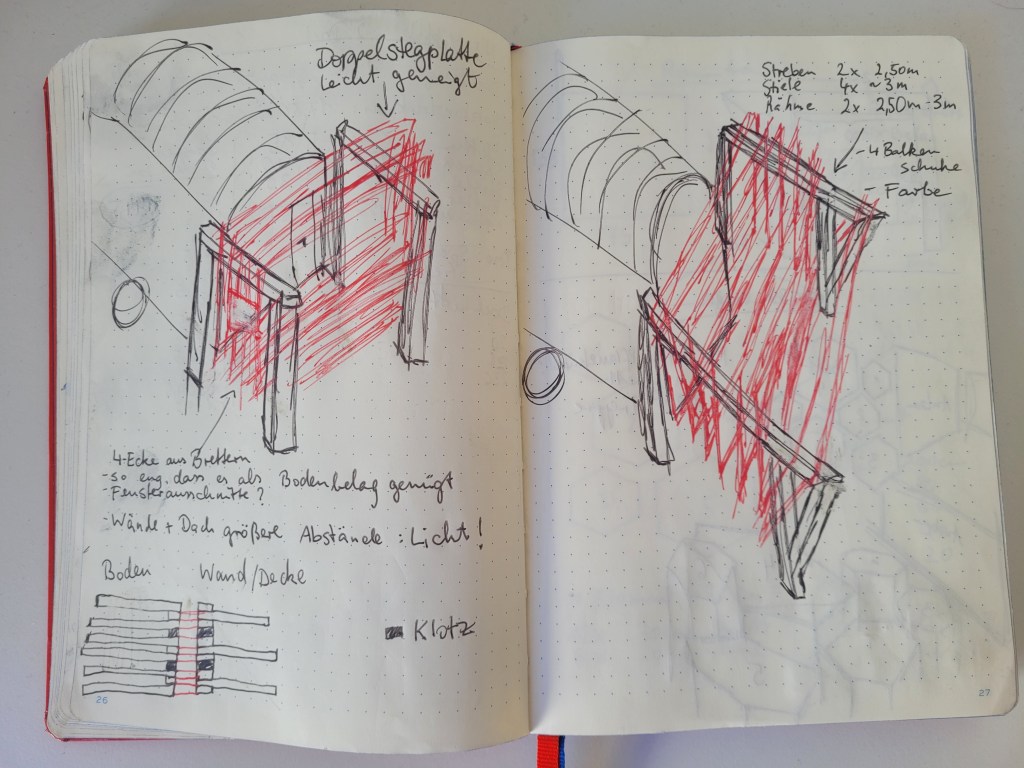
Sketch & early studies
This is the only sketch that exists of this structure.
I rather focused on on-site experiments and investigations about opening angles for the best view and how many wall and ceiling boards would be necessary to make the structure stable while trying to get as much light in as possible.
Build process
Built solo over two focused weeks, this porch grew from quick on-site mock-ups into a prefabricated timber frame that I assembled and braced on site. I then added cheap second-choice boards from a local sawmill, translucent roofing and simple built-ins to shape light, views and a sheltered place to live outside.
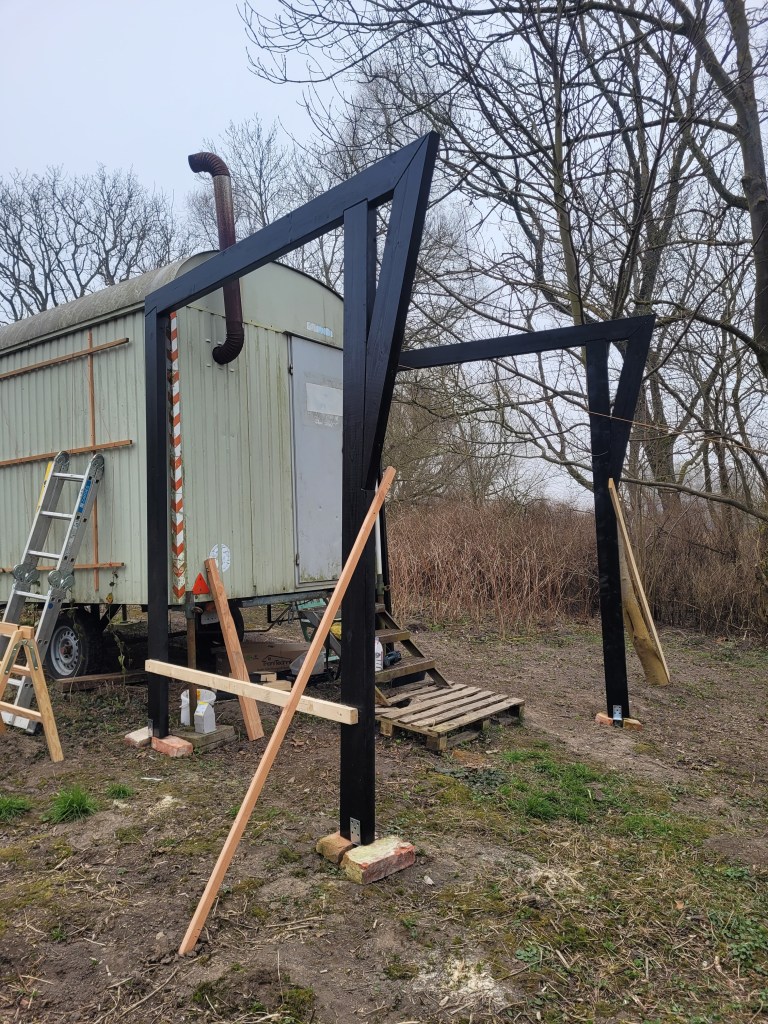
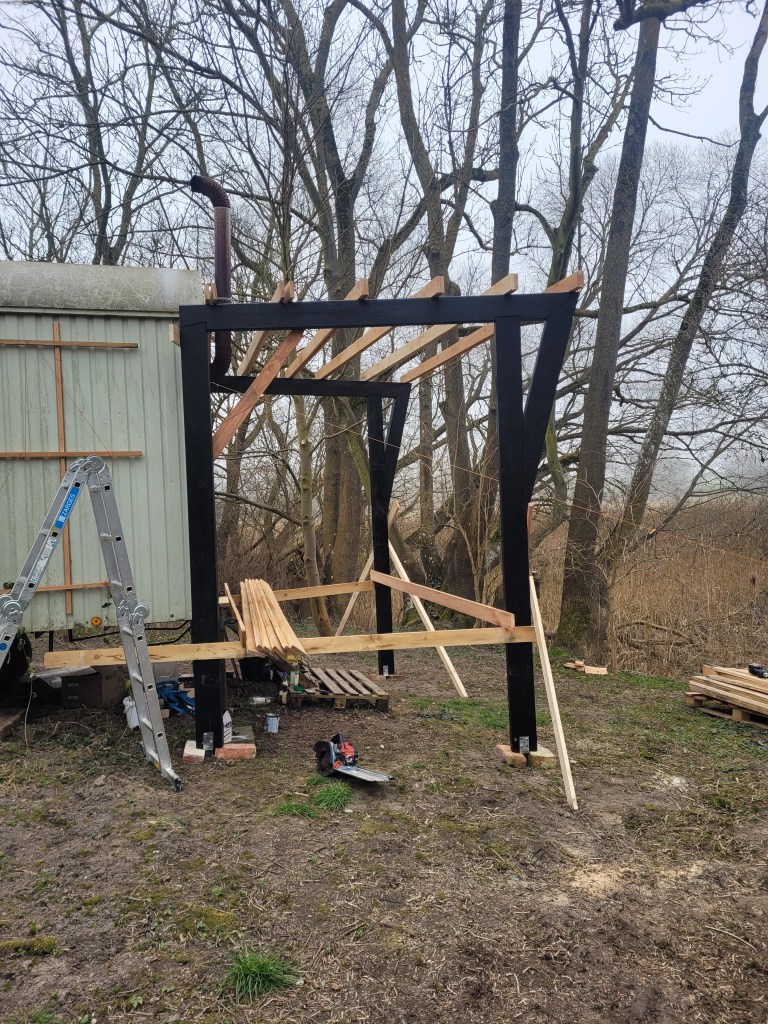
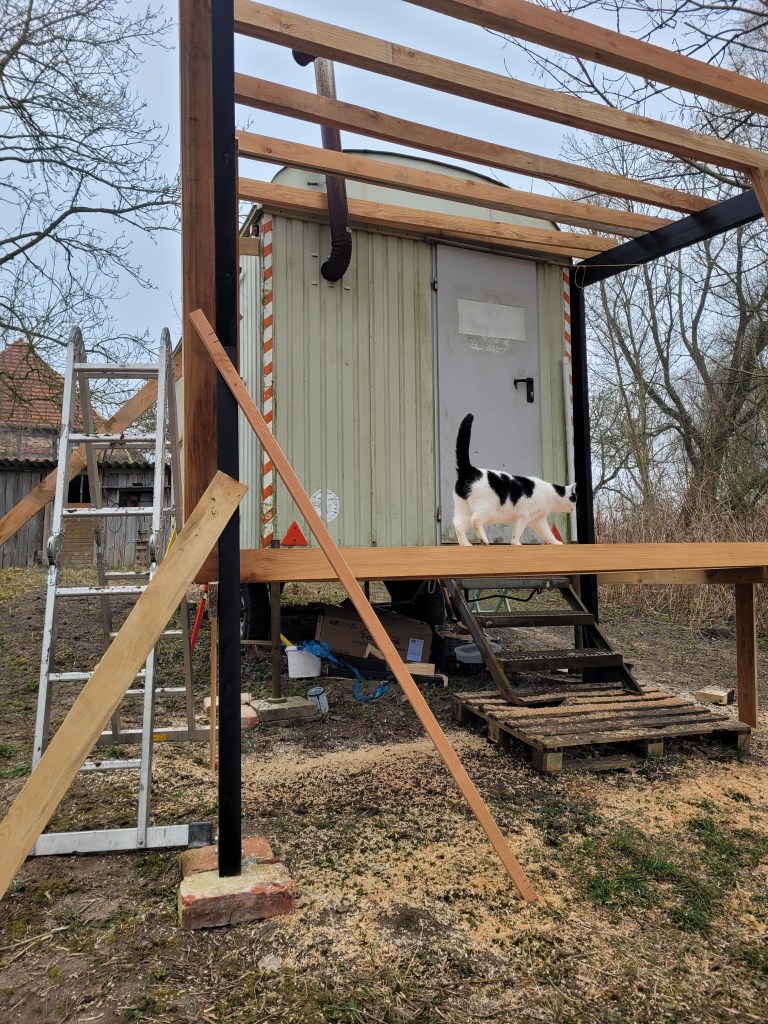
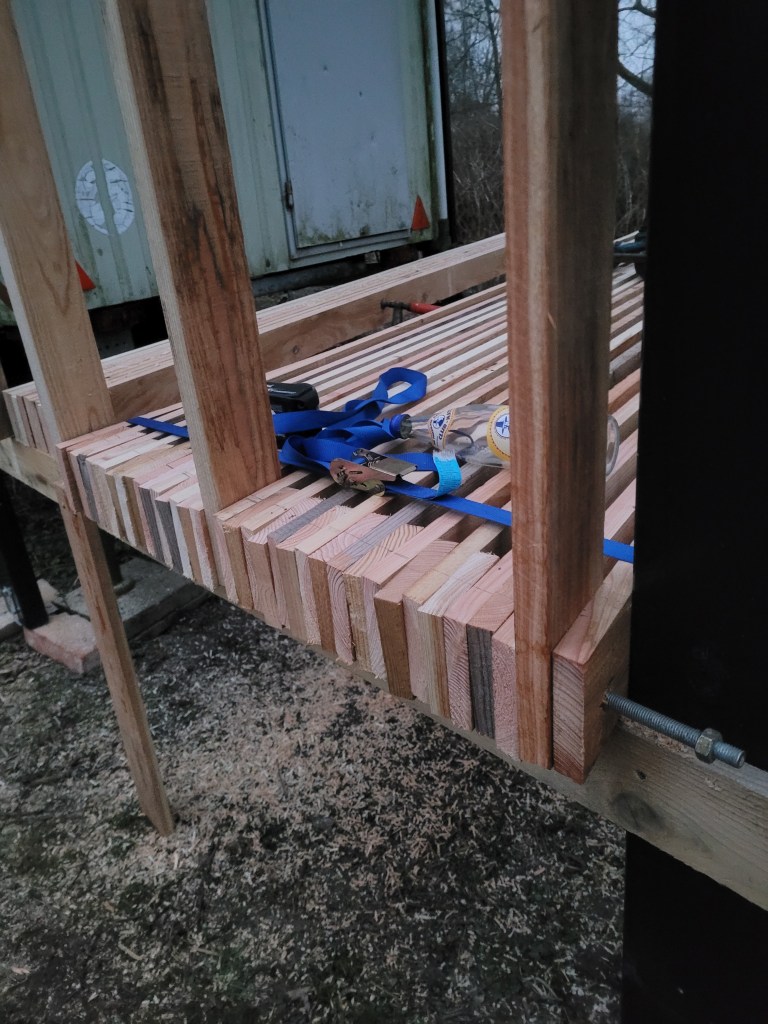
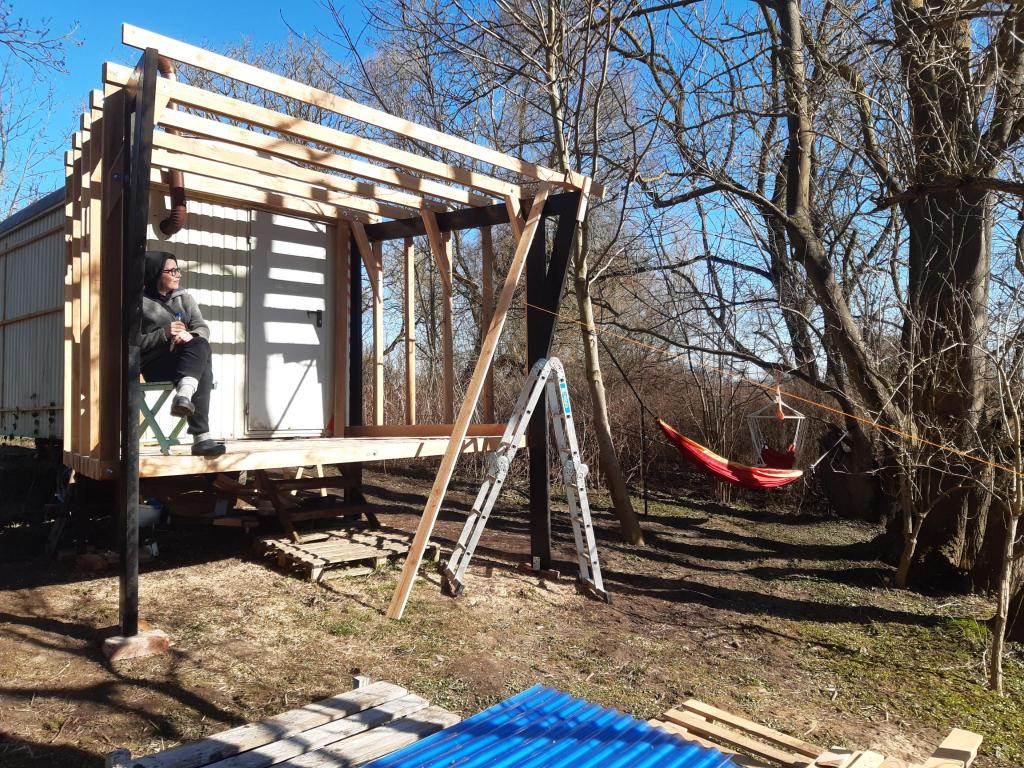
- Setting up the painted timber frames I pre-assembled earlier.
- Structuring the ‘hanging basket’.
- Welcoming a little visitor.
- Mounting walls and floor with 18mm threaded rods.
- First seat test with sun coming in from the south.
hexagonal stairs
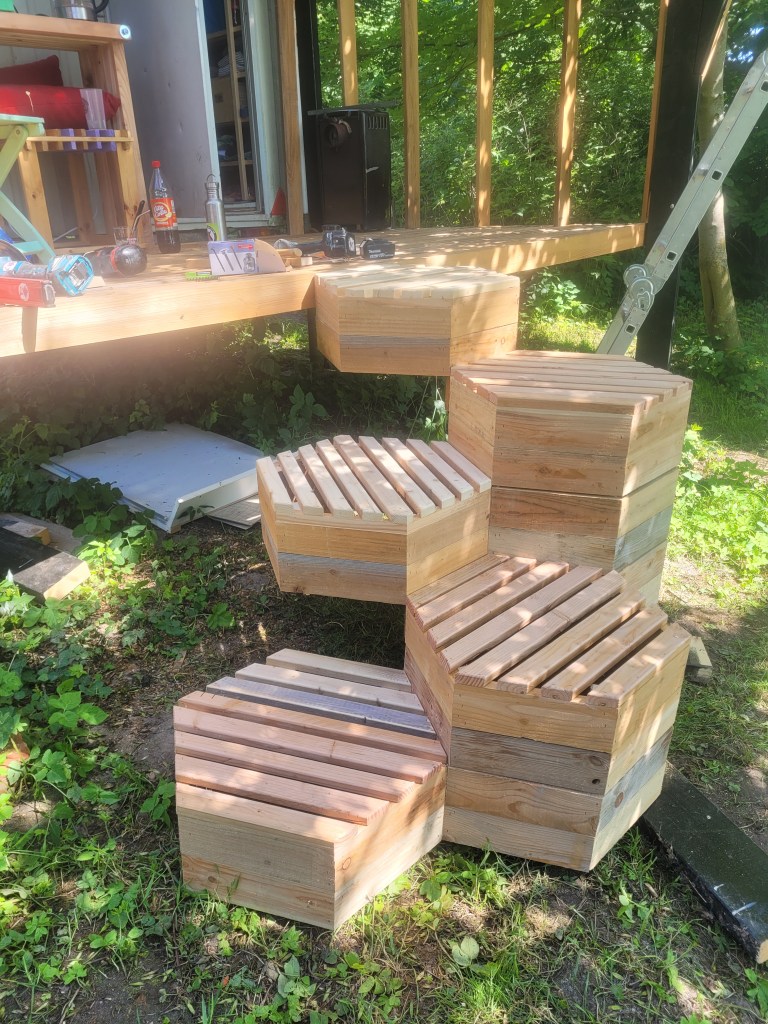
As a mean of carefully extending the space further into the landscape I came up with a modular hexagonal system that would allow to create landscapes with platforms on multiple, adjustable levels.
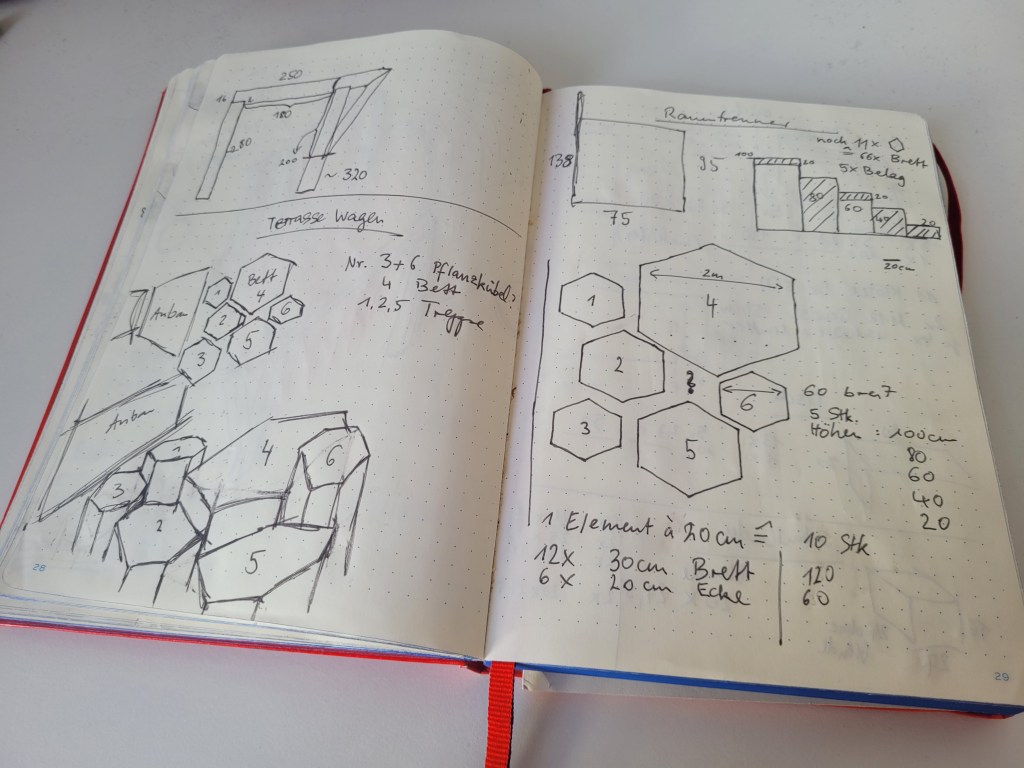
This is the first sketch of a modular adjustable system to shape flexible outdoor landscapes.
And this is the first prototype of this system.
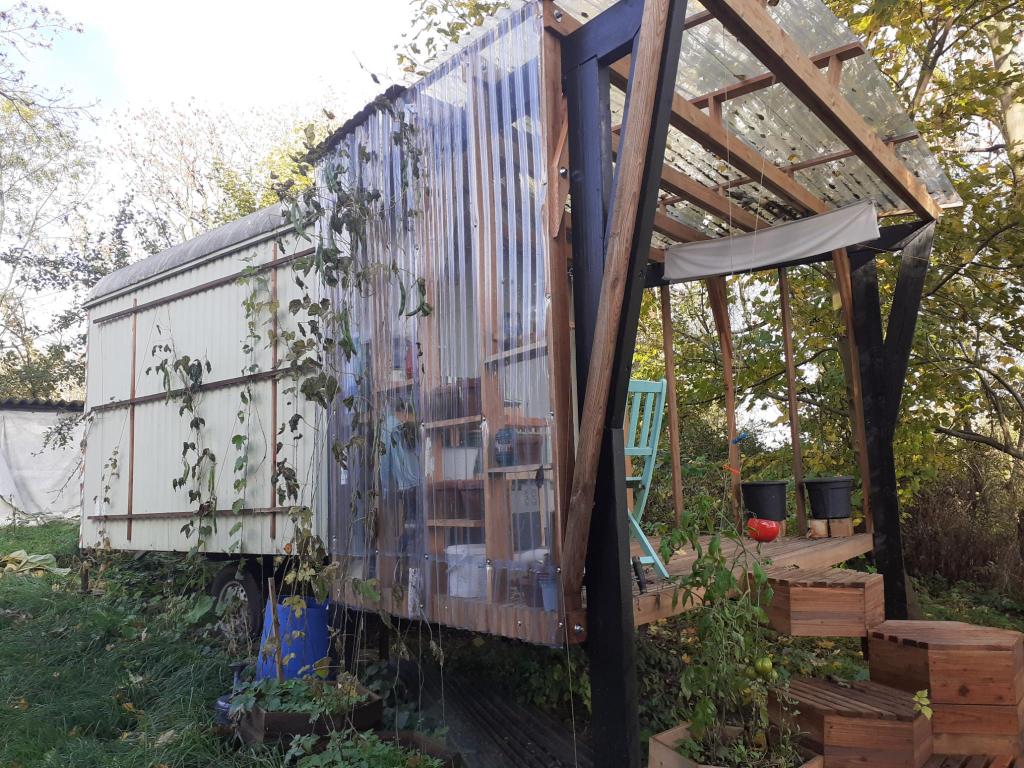
Modular hexagonal stairs to enter the porch with class.
Final outcome
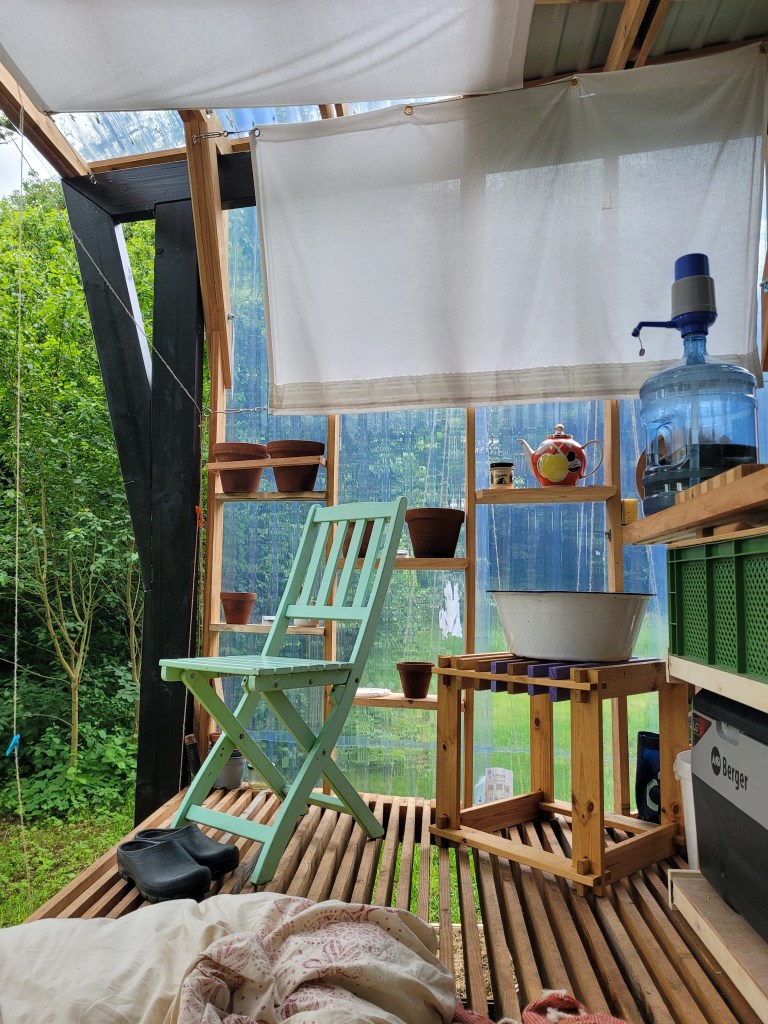
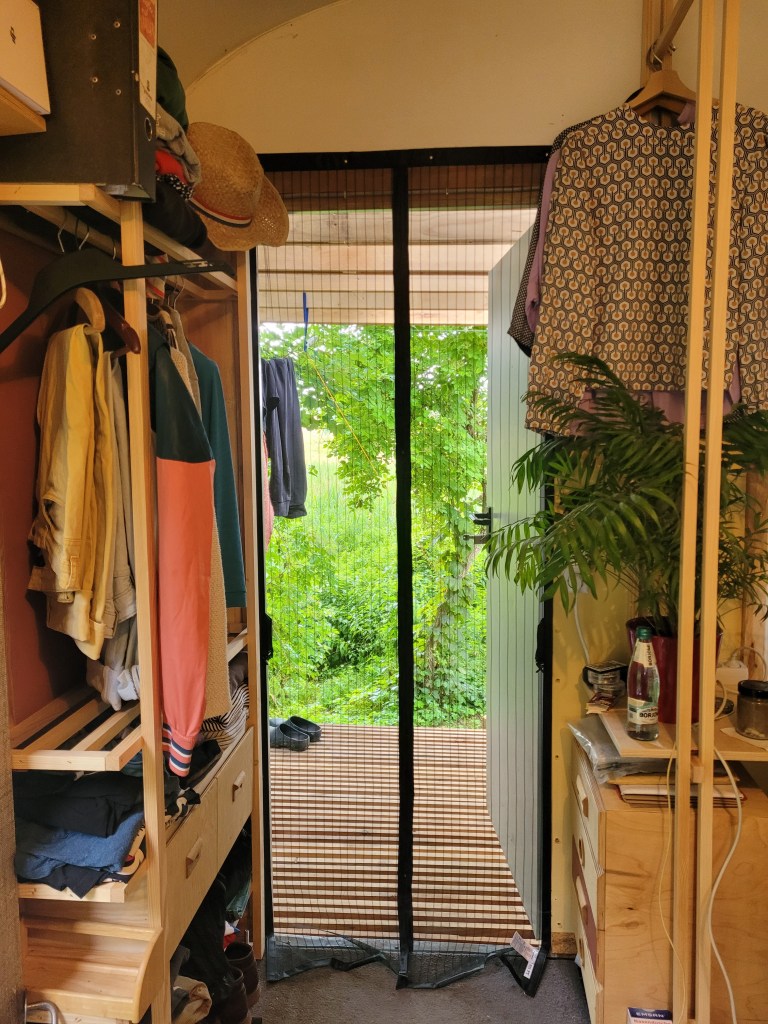
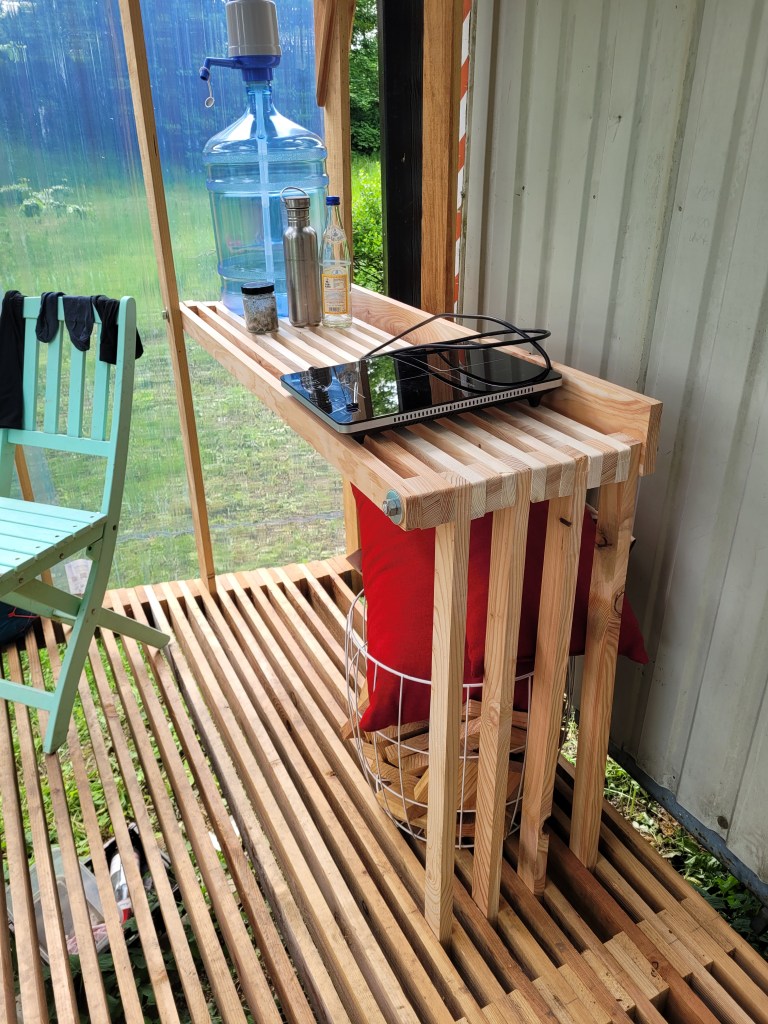
I enjoy to sit out here and watch the light move across the fields and hedgerows. From this spot, you can see the sky open wide while still feeling tucked away from the village. I built the porch as a quiet threshold: the way it frames the landscape, filters the breeze and catches the changing light turns this small add-on into a sheltered lookout, letting people choose anywhere along the line between private retreat and open horizon.
Reflection & takeaways
This porch began as an experiment: my first time inventing and building a structure like this from scratch and my first attempt to respond so carefully to a specific place. On a shoestring budget and with my own hands, I worked step by step. The light timber frame, the translucent roof and the hexagonal steps all grew from paying close attention to sightlines, sun, rain and how bodies move through this narrow threshold between indoors and out. In the process I was less following a plan than discovering one, testing how modest materials and simple joints could adapt to this context. This in-between space has become a record of that learning: a small architecture shaped by listening to its surroundings and a reminder of why I build at all.
Building this porch taught me to design with the site,
not just on it.
— Marieke, woodworker & designer

