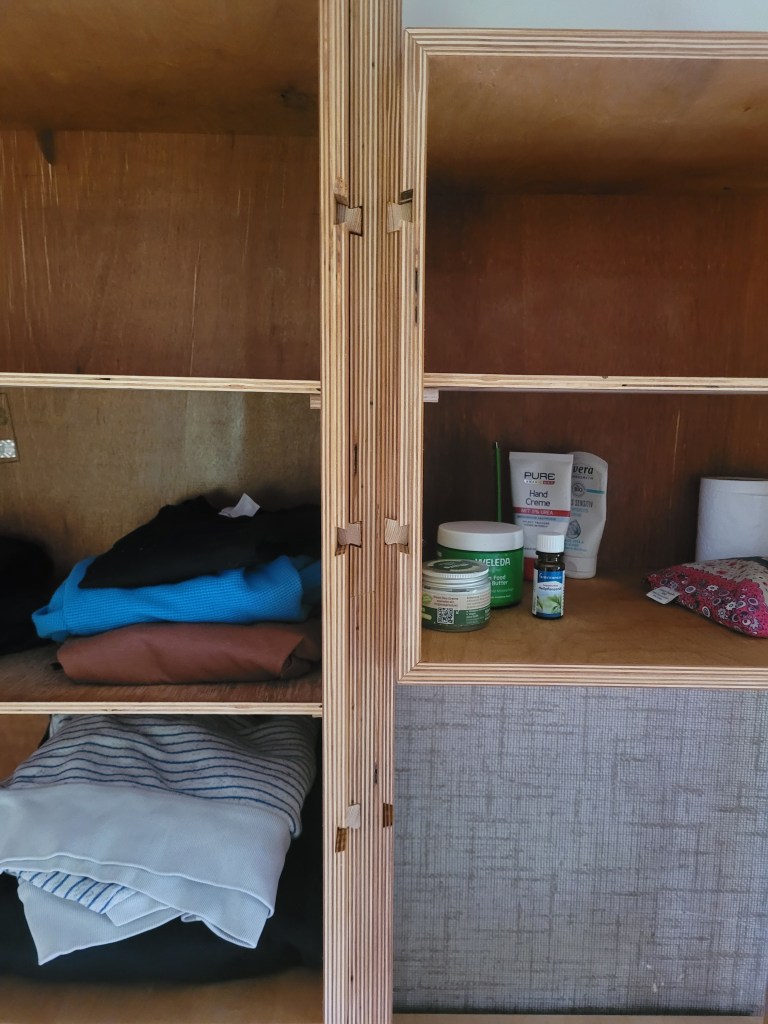
a modular shelf to infinity
100% wooden prototype for a furniture system that can grow forever
Project at a Glance
project type
furniture design prototype
role
concept, design, fabrication
year
2024
keywords
modular
circular material use
iterative prototyping
scalable system
highlights
single material
no metal fasteners
tool-free assembly
stand-alone room divider
Concept: A Shelf that Grows into Eternity
This project explores a modular shelving system where a set of repeating modules can extend in any direction, allowing the furniture to adapt to new rooms, uses and lifetimes while reusing the same reclaimed material.
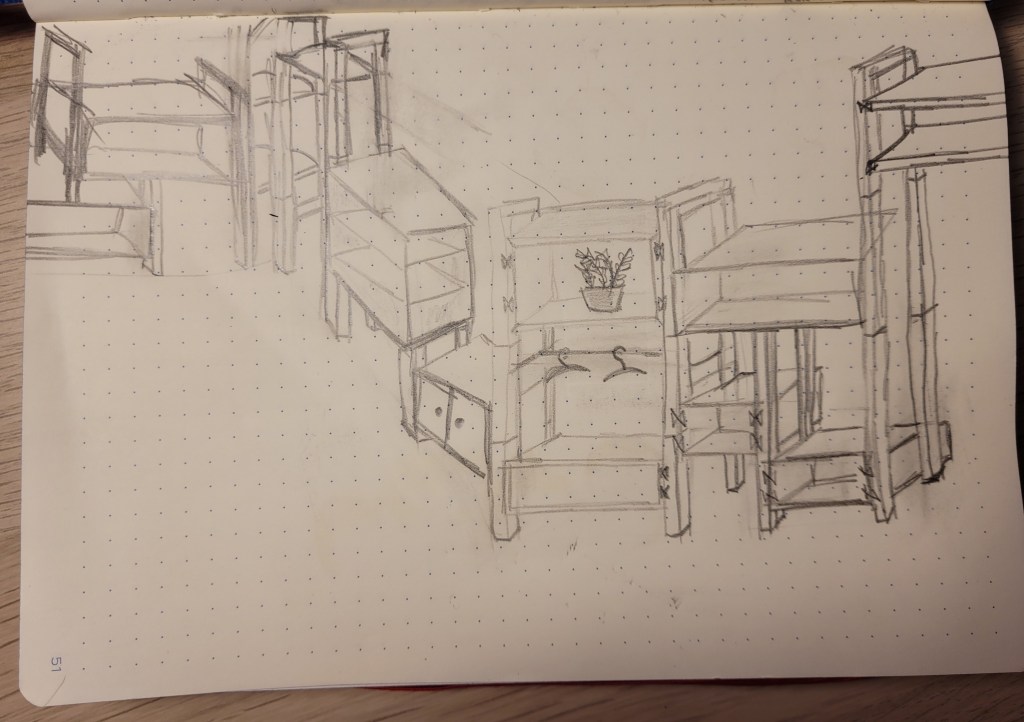
There is a lot of potential in the box modules to turn this whole thing into a lively, versatile design highlight
- box units with glass doors, sliding doors, wooden doors, no doors, not even a back wall to create see-through modules for room dividers ..
- box units with full-width and box units with half-width so the frame structure can be playfully interrupted
- corner modules so the system can change direction in the room
- light and thin modules for simple shelf boards, clothes rails, ultralight and perforated shoe racks ..
No metal connectors involved. 100% wastewood.
I started from the question ..
How can one small module become
a lifelong piece of furniture?
Modularity became the answer, allowing the shelf to be reconfigured, expanded or reduced as life changes, without discarding material.
Constraints
- use only discarded packaging plywood
- simple, repeatable joinery
- scalable modules for different spaces
- tool-free, intuitive assembly
From Sketch to System
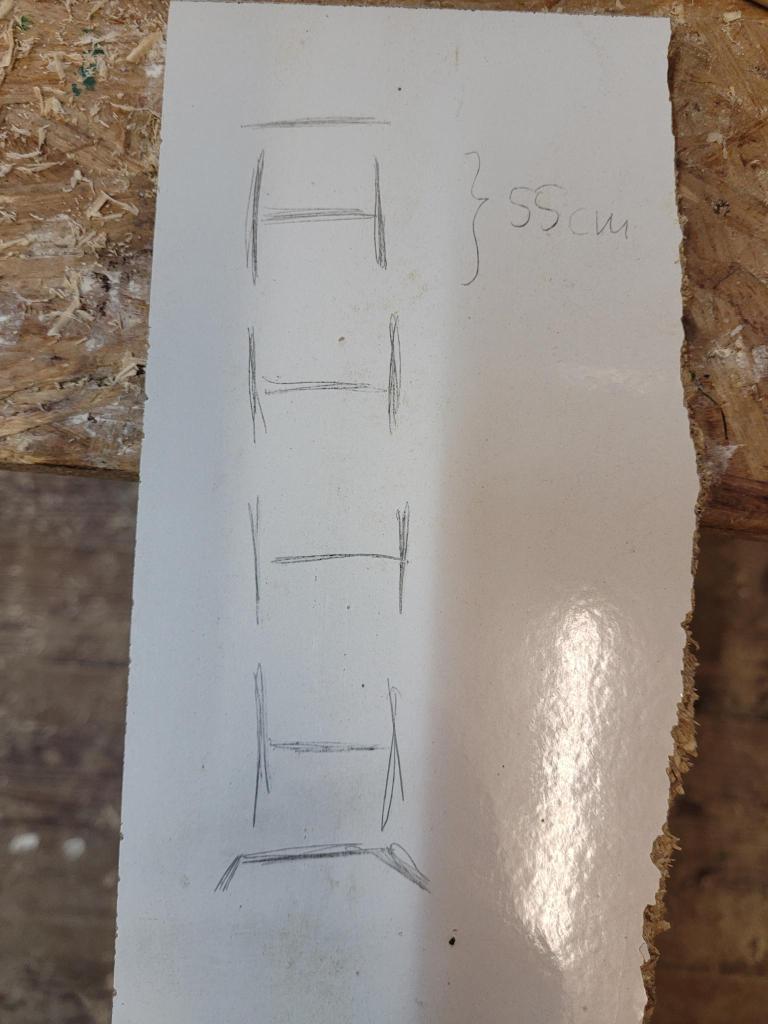
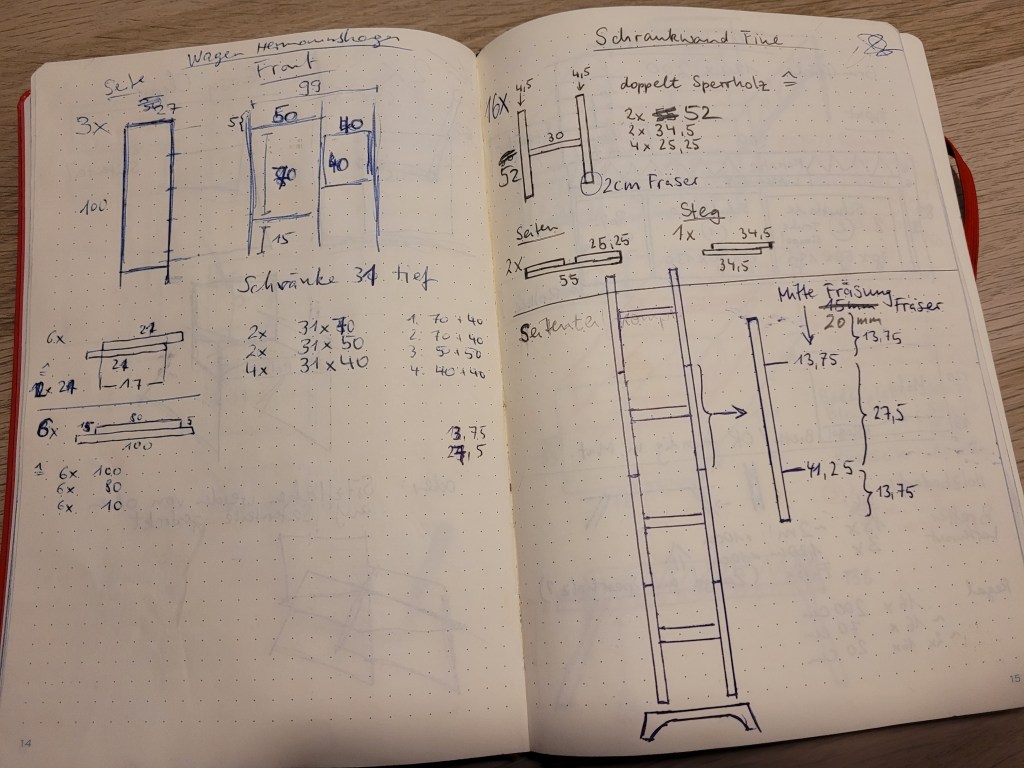
Early sketches focused on finding a simple geometry that could repeat without becoming visually heavy. I tested different joint directions, rhythms and proportions to understand how a single module could lock into a stable, legible system.
Prototyping: Trial and Error
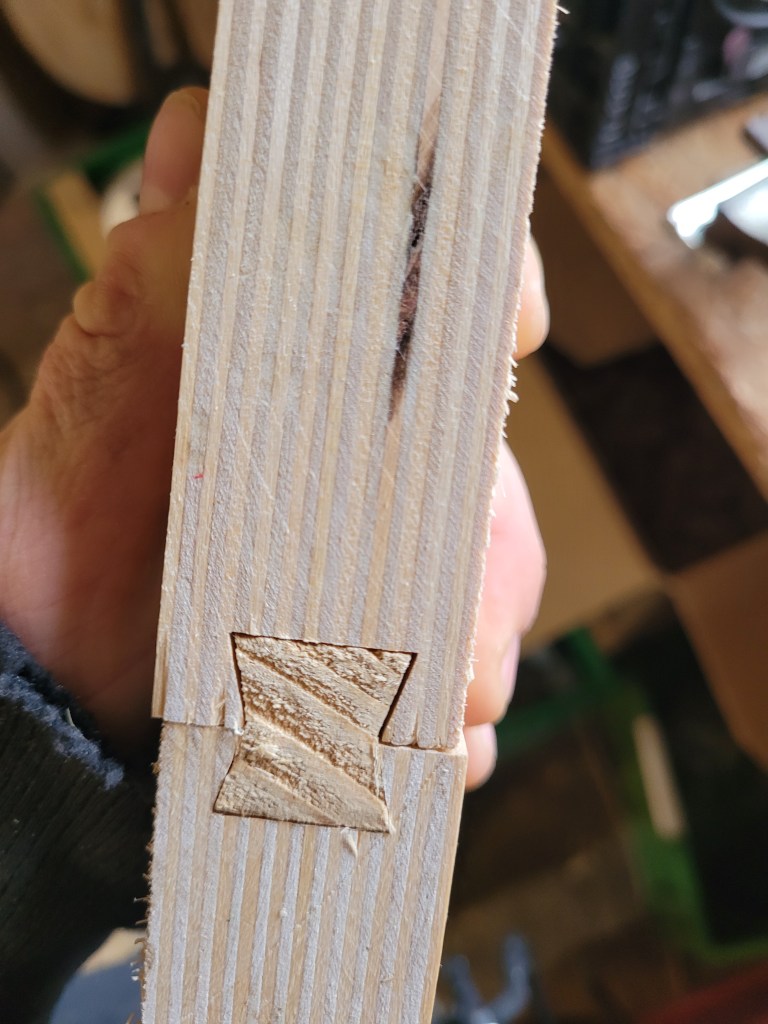
I built a series of quick prototypes to fine-tune the joints, to test stacking patterns and see how the dovetail connectors react to stress and leverage. Each iteration revealed new failures and adjustments to refine the frame system.
- joint strength under vertical and lateral loads
- a connector pattern that will work just fine with modules of different heights being attached to the frame
- ease and speed of assembly without specialised tools
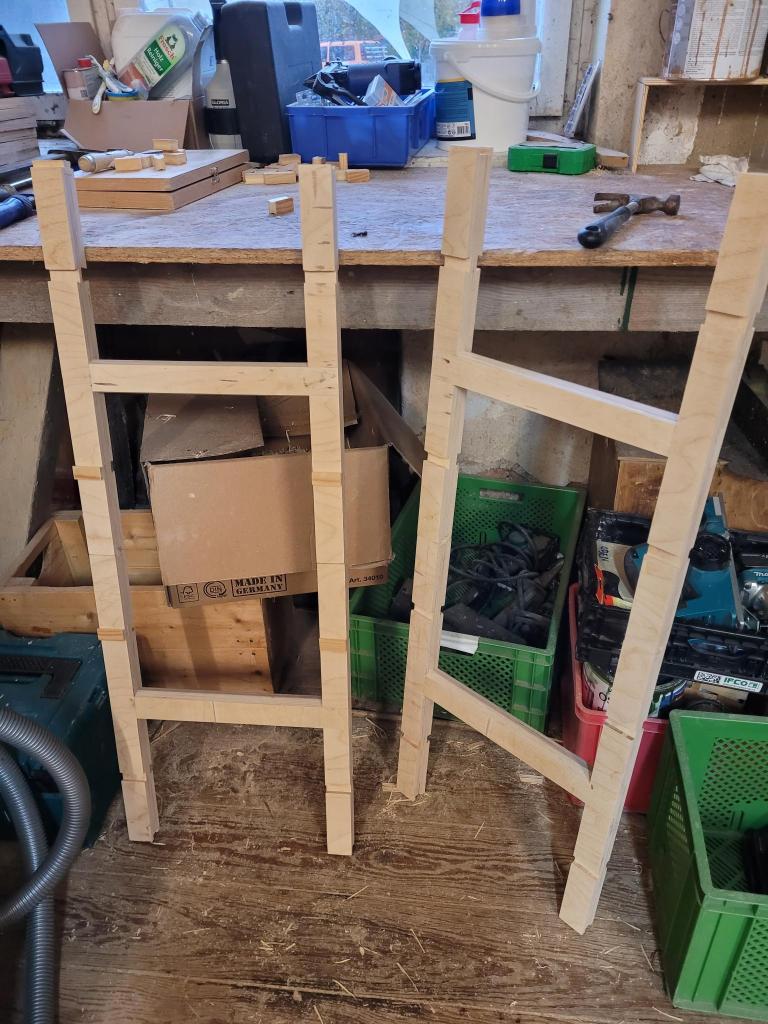
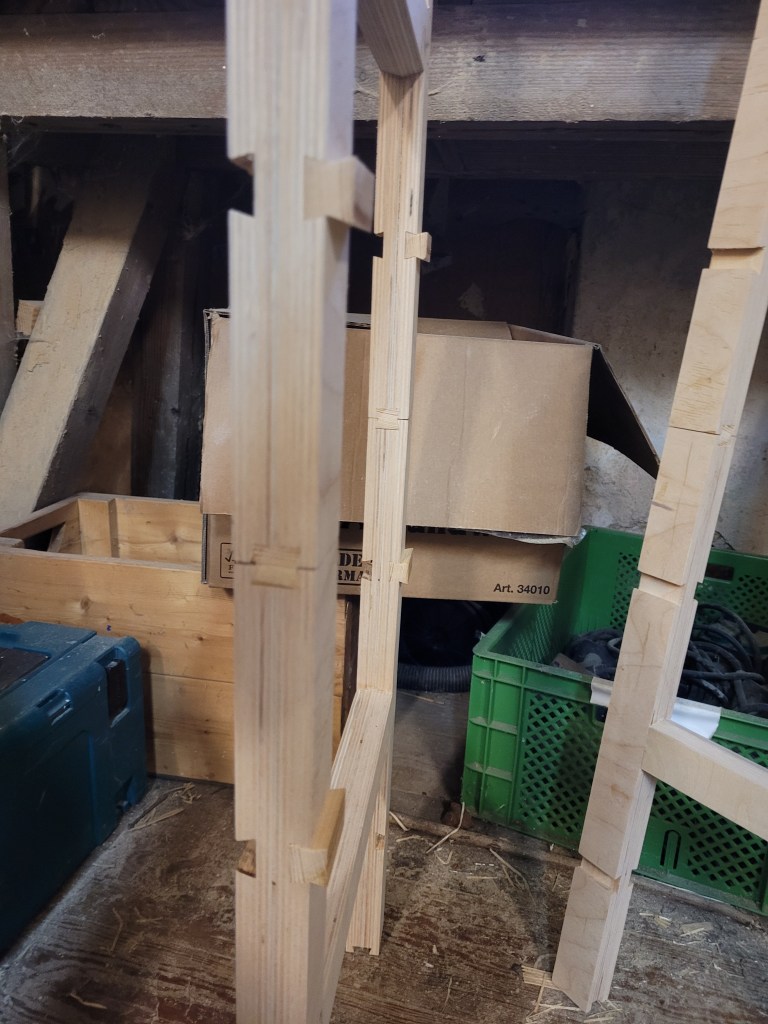
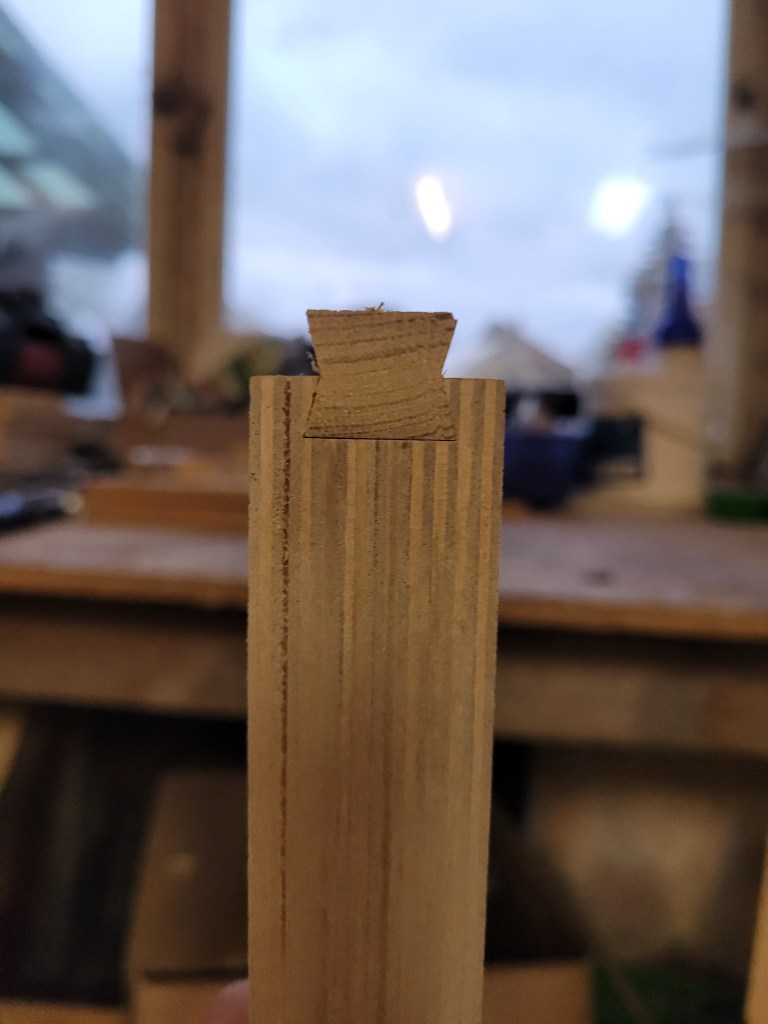
The Prototype
The intermediate prototype is a simple independent storage unit with 2 interchangeable box modules that lock together through interlocking notches and friction, without screws or metal hardware. Each set of modules can potentially assemble into low sideboards, tall bookcases or room dividers.
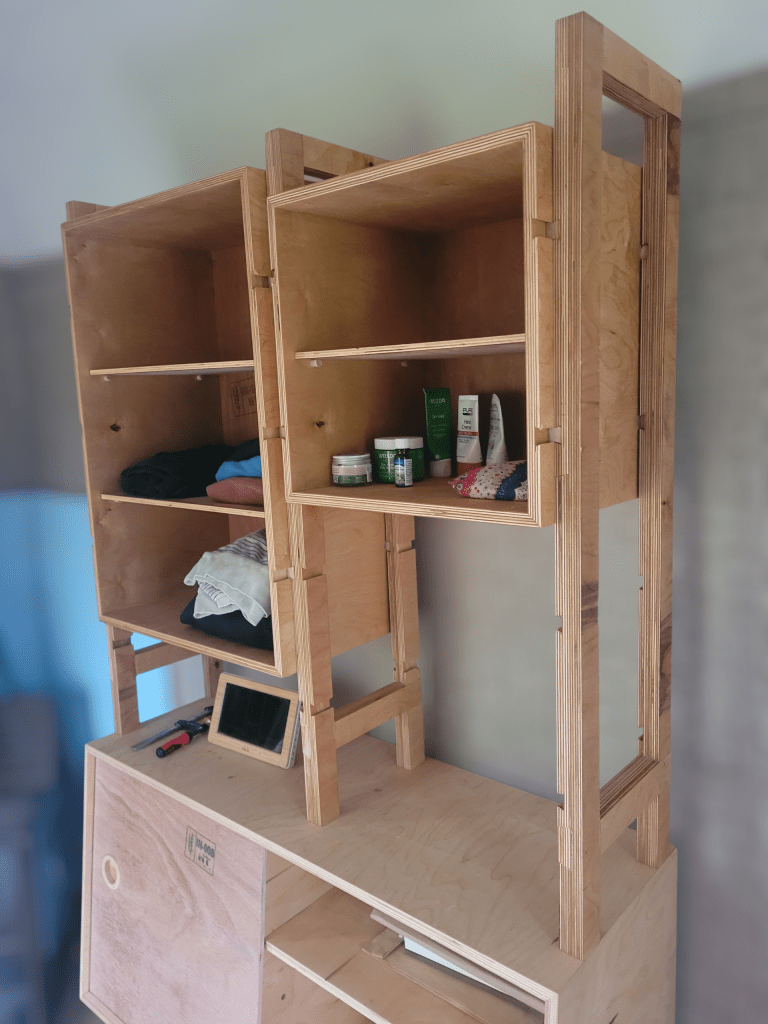
How It Grows
- Add new modules to the outer edges of the existing shelf.
- Even more flexibility by using two different widths of boxes (50% & 100%).
- Add corner modules with adjustable angles to let it grow in every direction.
Because everything here is compatible, the system can grow gradually as new material becomes available or shrink when space is limited, without creating waste.
What I Learned
Designing and prototyping this modular shelf system taught me how much small geometric choices shape assembly, stability and how people actually live with a piece. Balancing clean lines and flexibility pushed me to find a structure that can be reconfigured in many ways without feeling rigid or overly grid-like. It also sharpened my sense of how construction details, recycled materials and finish all work together to create a system that is both practical and expressive.
Next Iterations
- Refining the joint geometry for full compatibility of all module sizes
- Determine module sizes according to joint geometry
- Testing statics and stability in stand-alone settings (room divider)
 wastewoooodworx