Featured Project:
Plywood Armchair
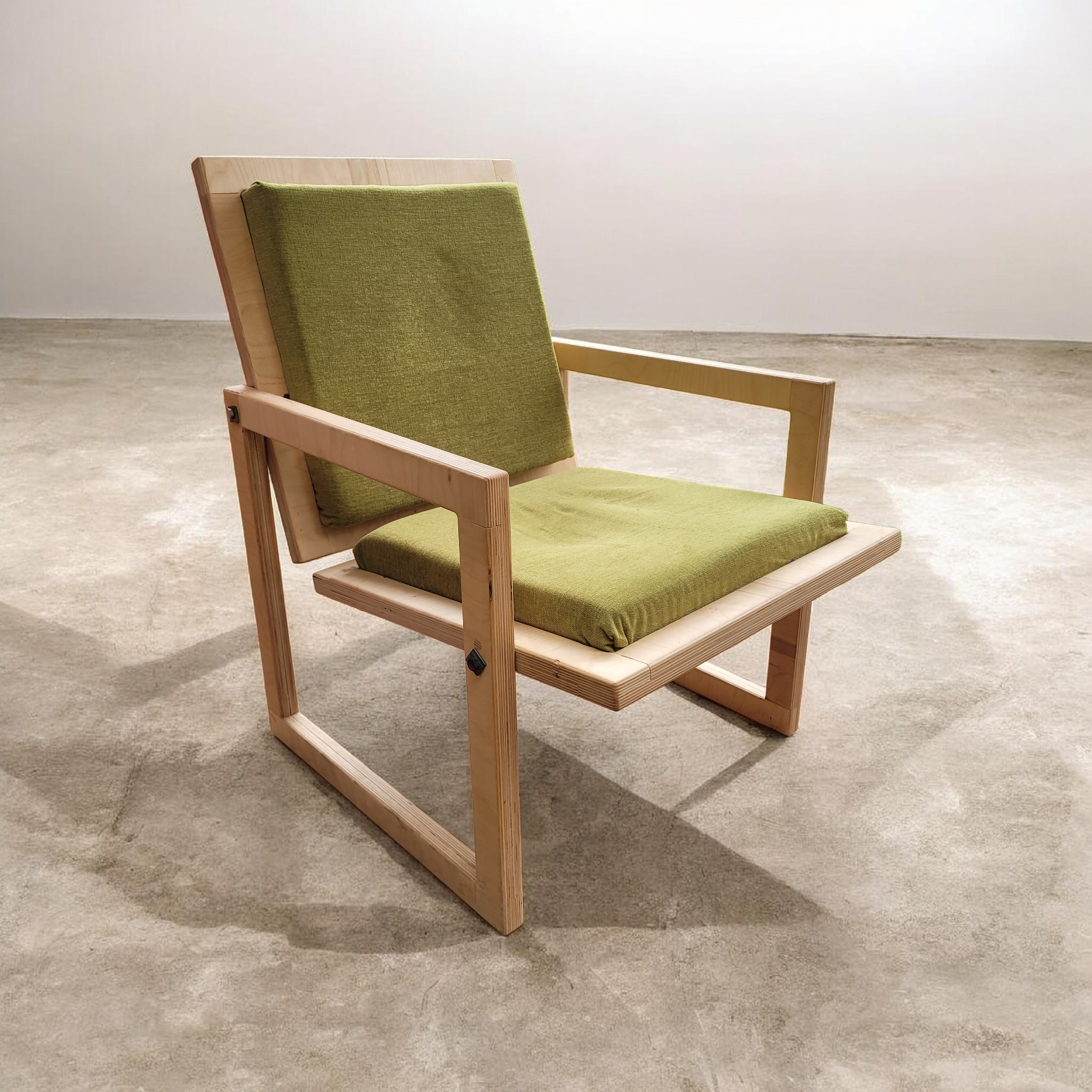
A spacious armchair from four identical laminated plywood frames ..
.. light, efficient and ready to grow into a whole matching furniture family.
project type
self-initiated solo project
role
concept, design, build
material
16mm packaging plywood
year
2024
Design Idea
Intent
- modularity
turn several identical components into something spacious yet humble - ease & efficiency
use as little material as possible to create a light & cheerful piece - playfulness
designing a floating effect that rewards the viewer at second sight
challenges
- material efficiency
turning ‘useless’ leftover plywood stripes of other project into something remarkable - dimensions & tilts
experiments with different seat tilts and their related user experience - upholstery
create a comfy seat while maintaining the minimalist design
Process Snapshot
Step 01 –
sketching & dreaming
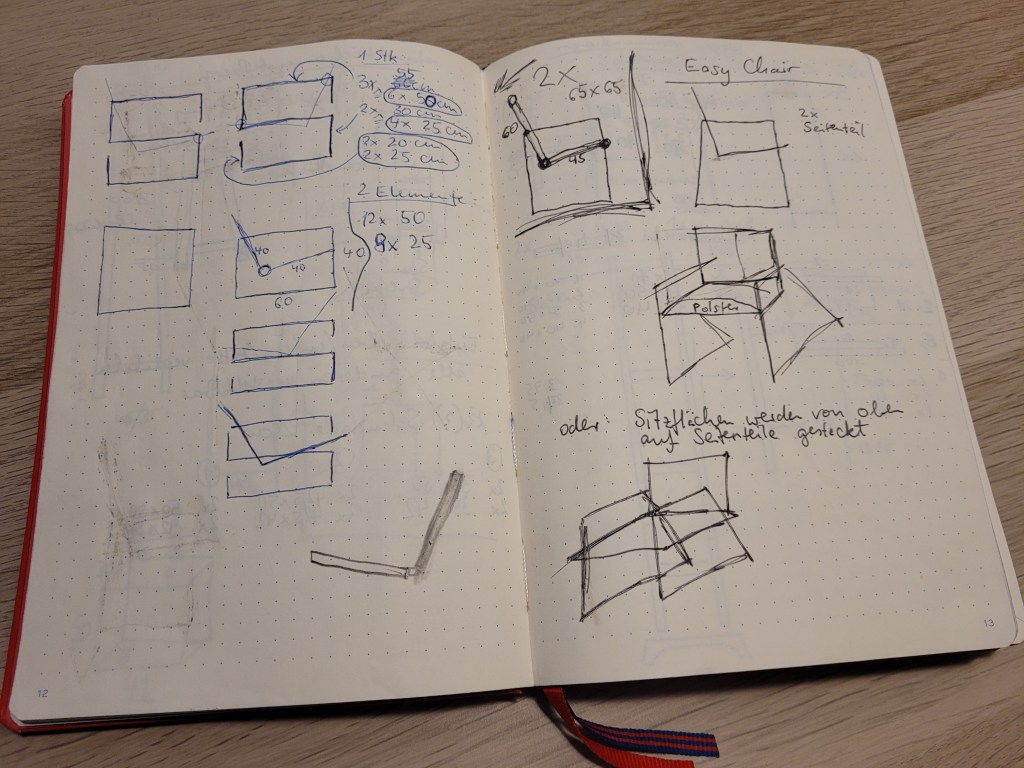
I started to think about how to turn my ‘useless’ offcuts into something in the middle of the night, with eyes closed, in my dreams. And sketched it in the mornings.
Step 02 –
dimensions & tilts
I negotiated the perfect size and positions of the modules so the whole ergonomics make sense while all four modules are identical. Btw: it’s 60x60cm
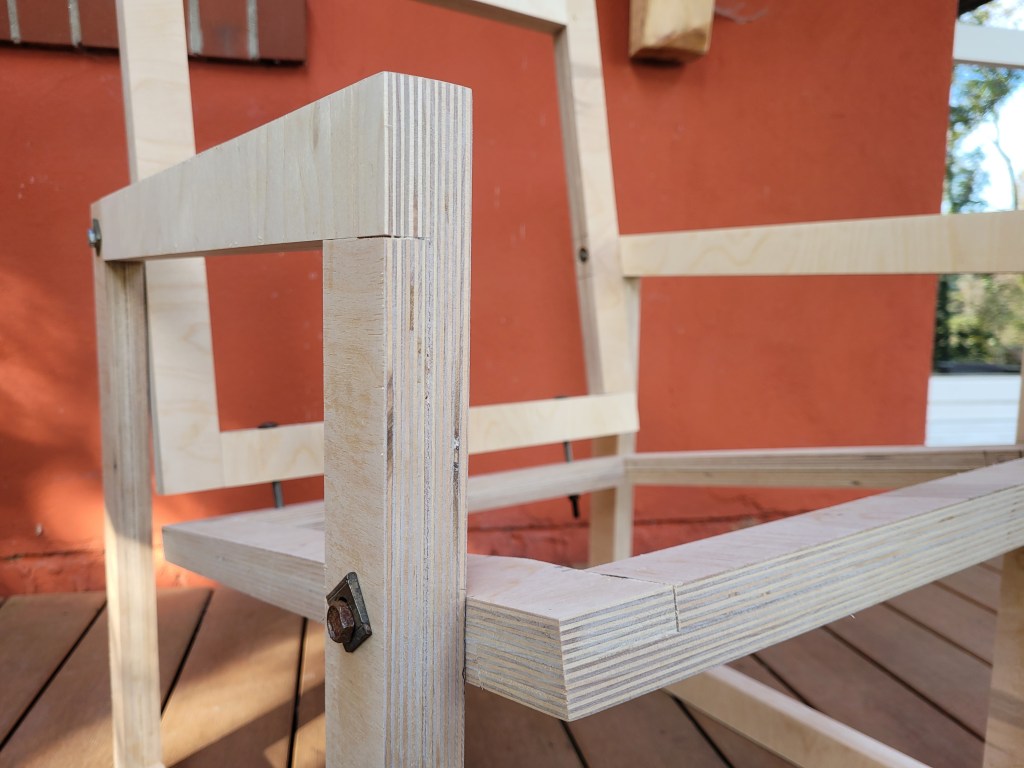
Step 03 –
upholstery & sewing
I experienced my initiation into upholstery and sewing by failing forward while making sure the upholstered parts are replaceable. It’s all modular, baby!
Step 04 –
floating effect
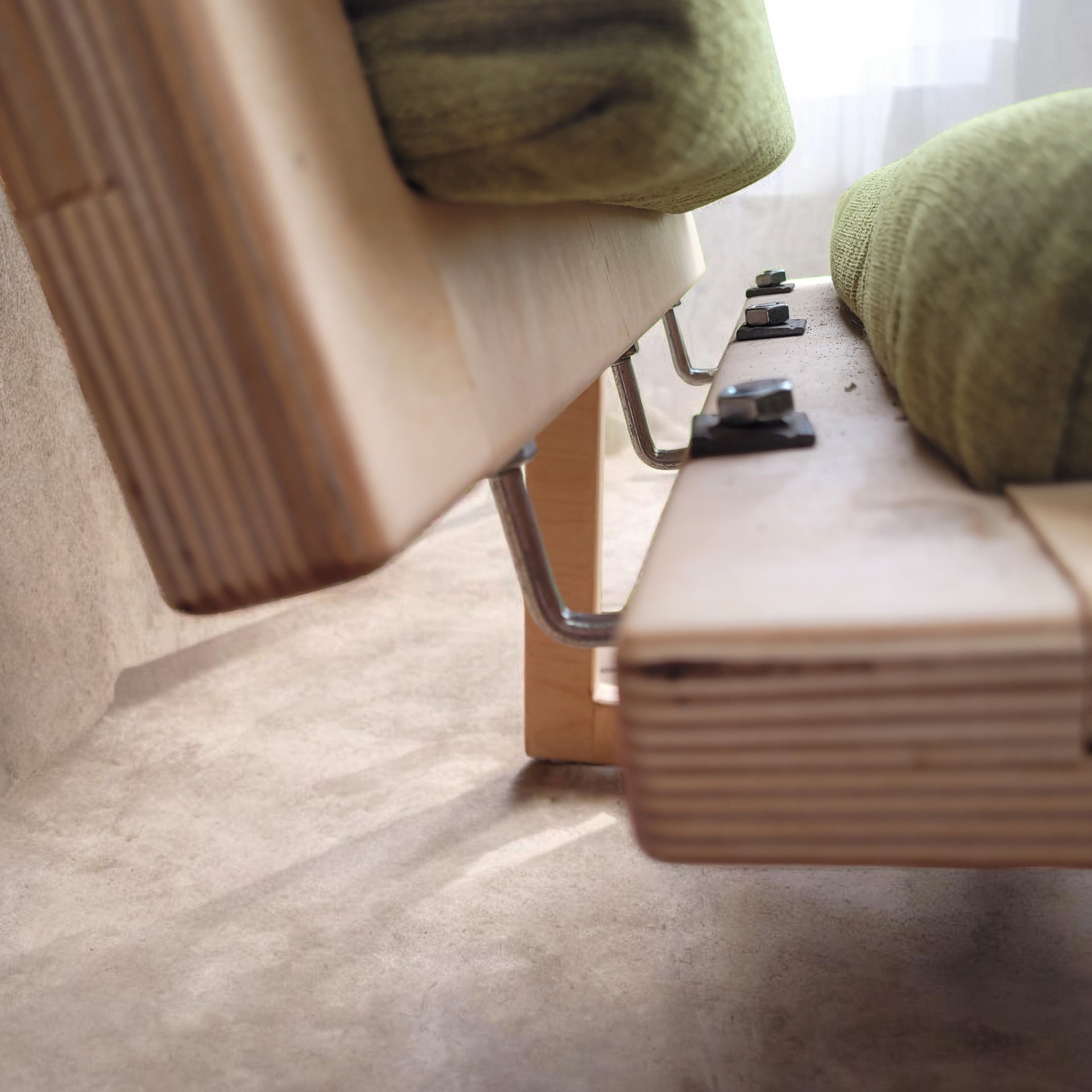
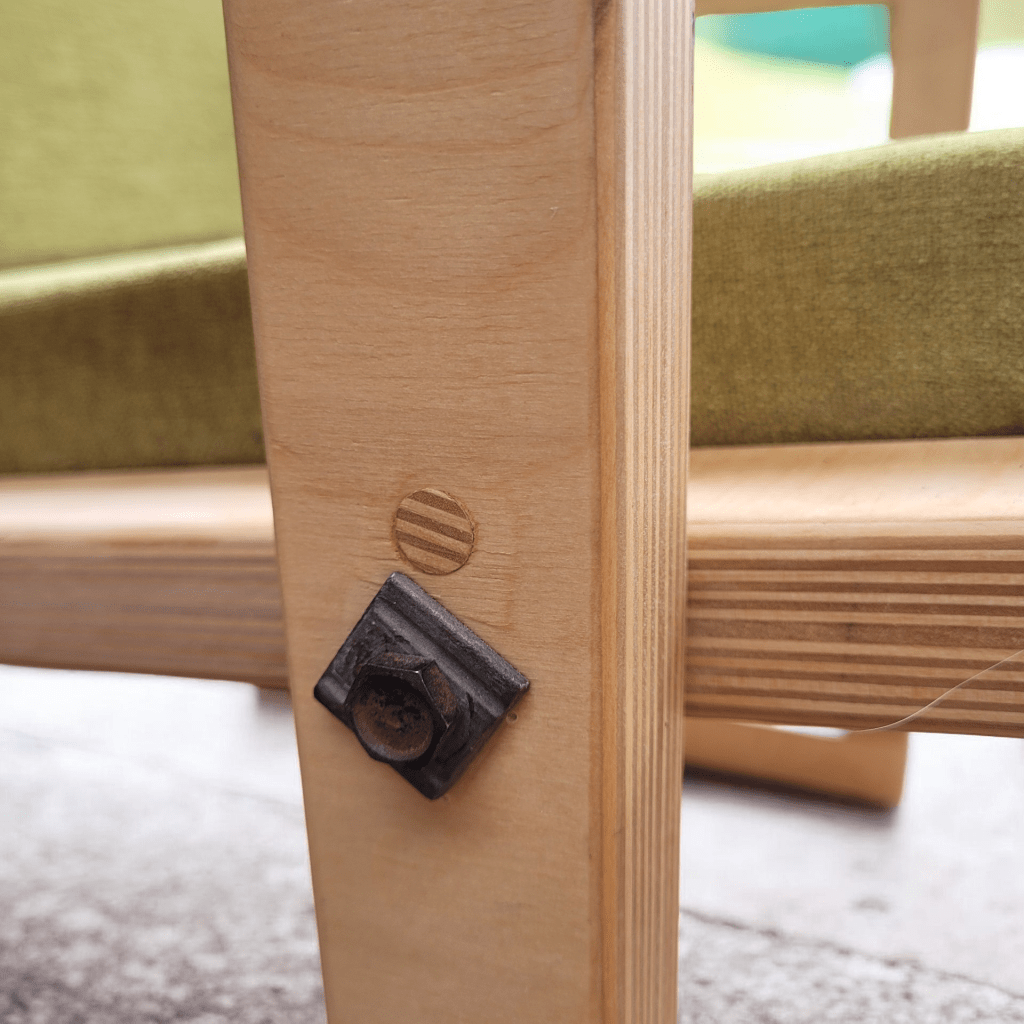
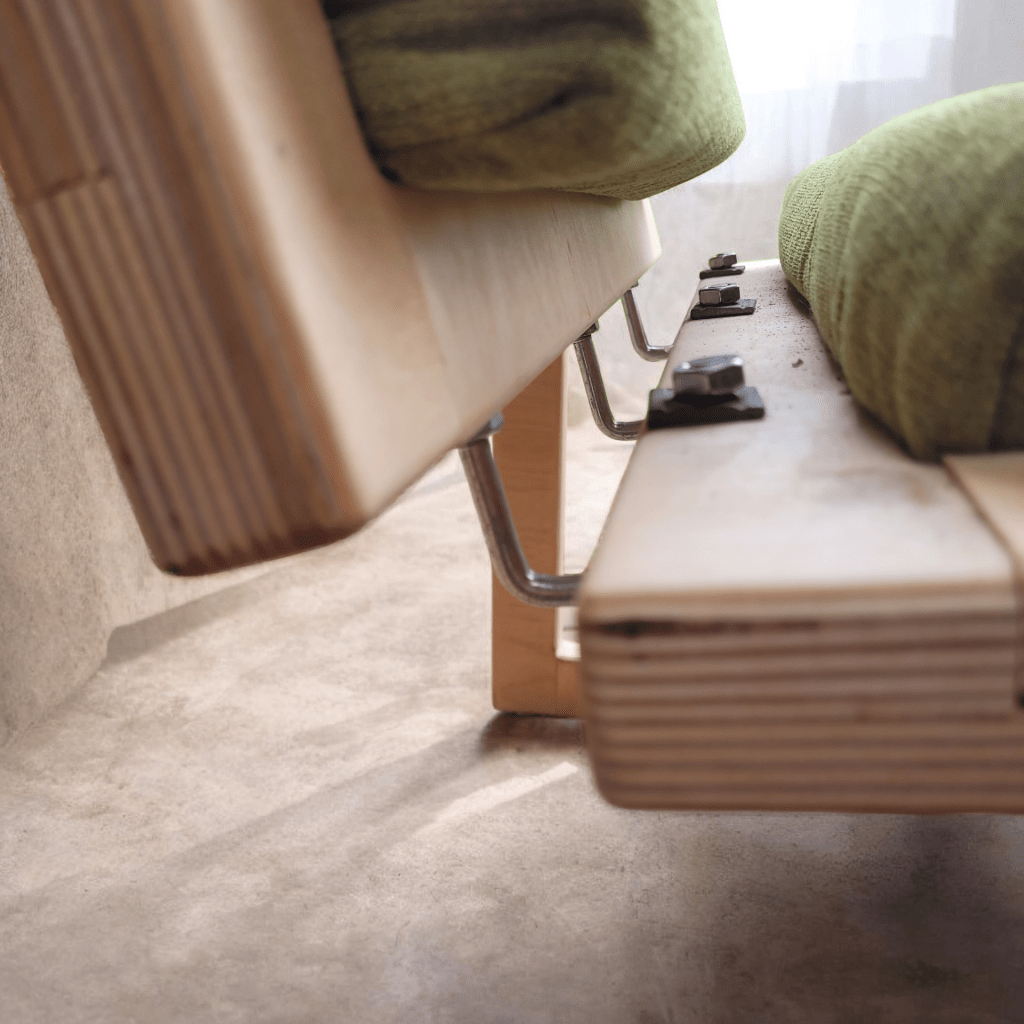
Nothing leaves the workshop without at least one little surprising detail. This connection creates a magical floating effect from certain perspectives.
Fail Forward:
Experiments That Didn’t Work
Experiment 01:
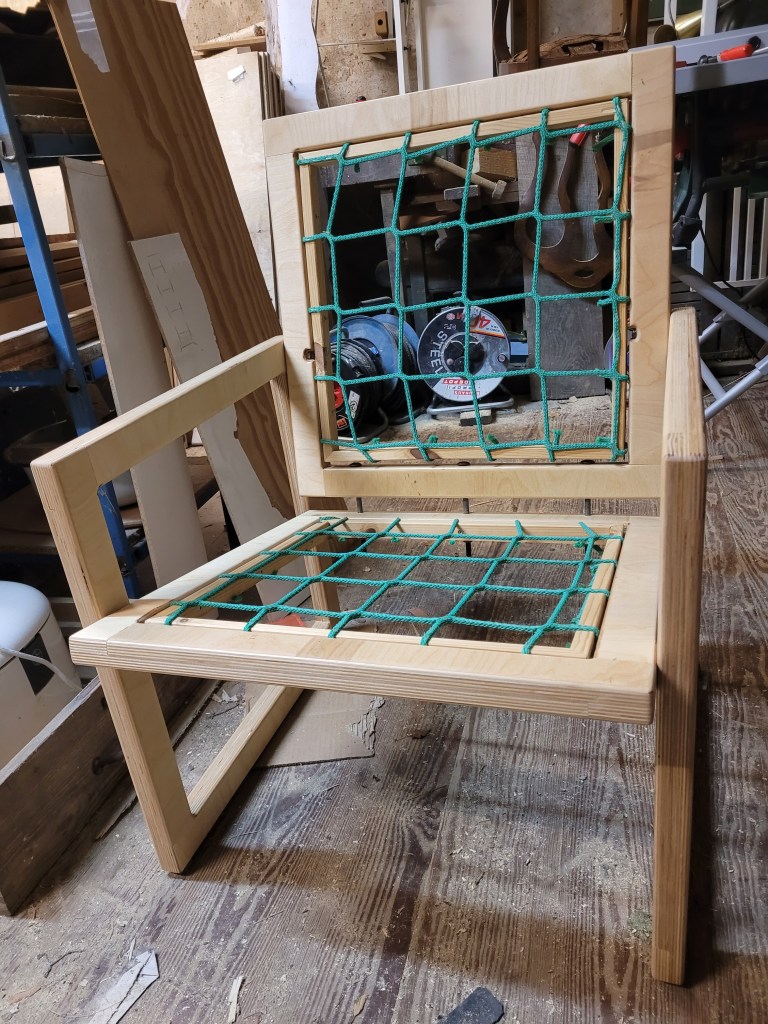
recycled net
As usual I used whatever I found to get ahead with this project. This net, as a seat base, got baggy very quickly and is only recommended if you like to sit in holes.
solution
Replaced this with appropriate jute upholstery webbing I bought.
Experiment 02:
rocking chair
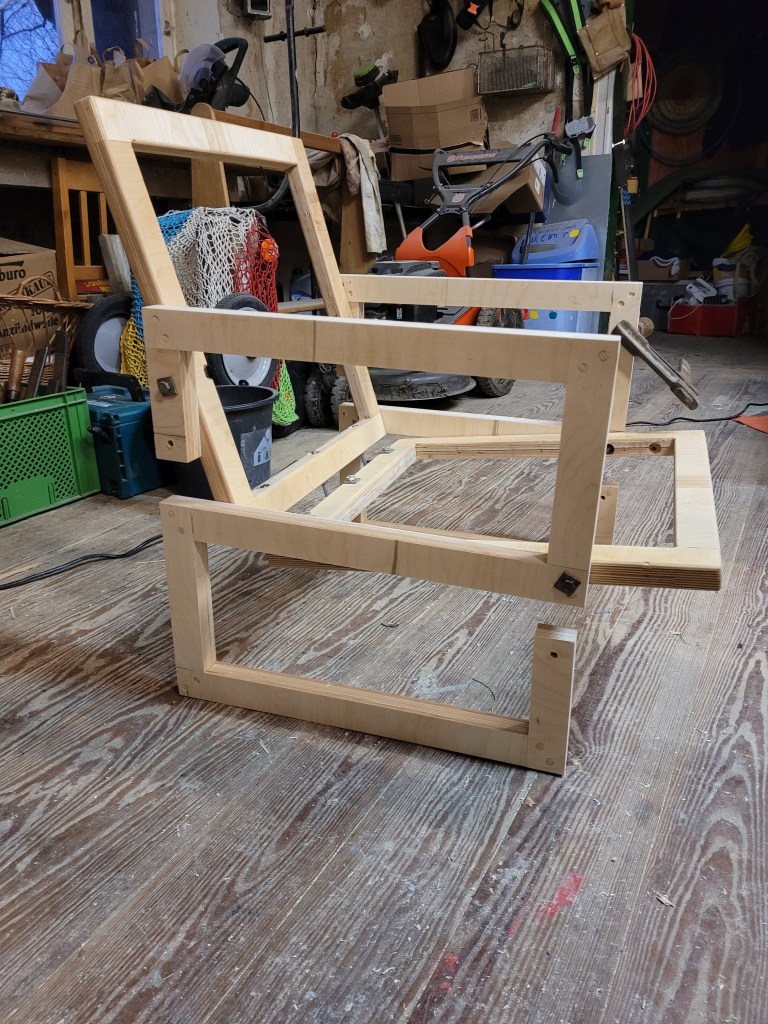
How nice, if this chair could slightly swing back and forth. Even after toughening up the side frames several times, they would still just break immediately.
solution
In this case procrastination and the return to the original idea of using four identical modules.
Experiment 03:
100% wood

After days and nights in the workshop I gave up on searching for a functional solid wood solution to connect seat and backrest while maintaining the floating effect.
solution
I found these amazing metal connectors instead. As subtle as wood joints could never have been.
Common Thread
So it seems like I repeatedly tend to run into fabrication challenges that let me fail first and grow afterwards.
Three Rules I Formed From Failing
- Don’t stop trying stupid things!
- Someone knows how to do this: find them!
- Don’t put failed ideas in the bin, put them on your bucket list!
Reflection
What I Learned
The process showed me how small adjustments in angles or material thickness can completely change comfort and stability. Most importantly, I realized that ‘failing forward’ is not just a nice idea but a practical method.
What I’d Do Differently
I’d bring in expert feedback on upholstery and joinery sooner, rather than only after reaching a dead end with DIY approaches.
How This Shapes My Future Work
Going forward, I want to keep designing objects that are efficient and modular, but that still contain a small surprise that rewards people for looking twice. I’ll also carry the “fail forward” mindset into future projects by deliberately building in space for experiments that might not make it into the final piece, but will inform it.
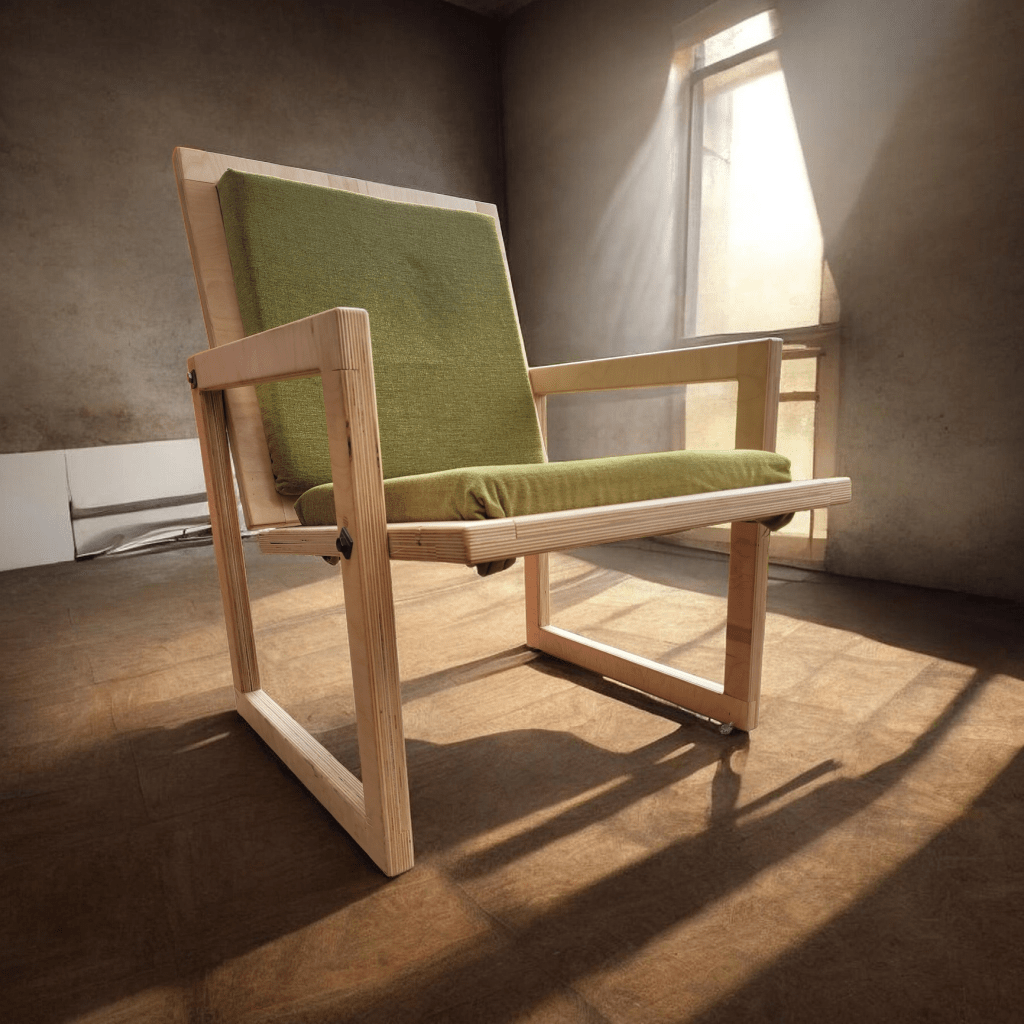
This picture shows how despite all the challenges this chair came into existence anyway.

