Tiny Living Experiments & Micro-Space Design
Tiny living is where my interest in space efficiency, material reuse, and strong visual identities come together.
On this page I present two van conversions built from recycled wood and bold colors, as well as a tiny wagon project where I designed the full interior, built all the furniture, and developed an experimental porch area.
These projects are part of my ongoing exploration of how compact spaces can still feel generous, playful, and architecturally precise.
Design Approach
Across these tiny living projects, I focus on three recurring themes: recycled wood as a primary material, strong colors to articulate space, and compact layouts that still feel open and humane.
- Recycled timber and plywood as primary materials, celebrating variation in texture and grain.
Van Conversions Recycled Wood & Strong Colors
Across several van conversion projects, I design compact interiors that combine recycled wood, bold color blocking, and carefully tested layouts to create spaces that are both robust and visually distinctive for travel and everyday living.
Tiny Wagon Summer House & Experimental Porch
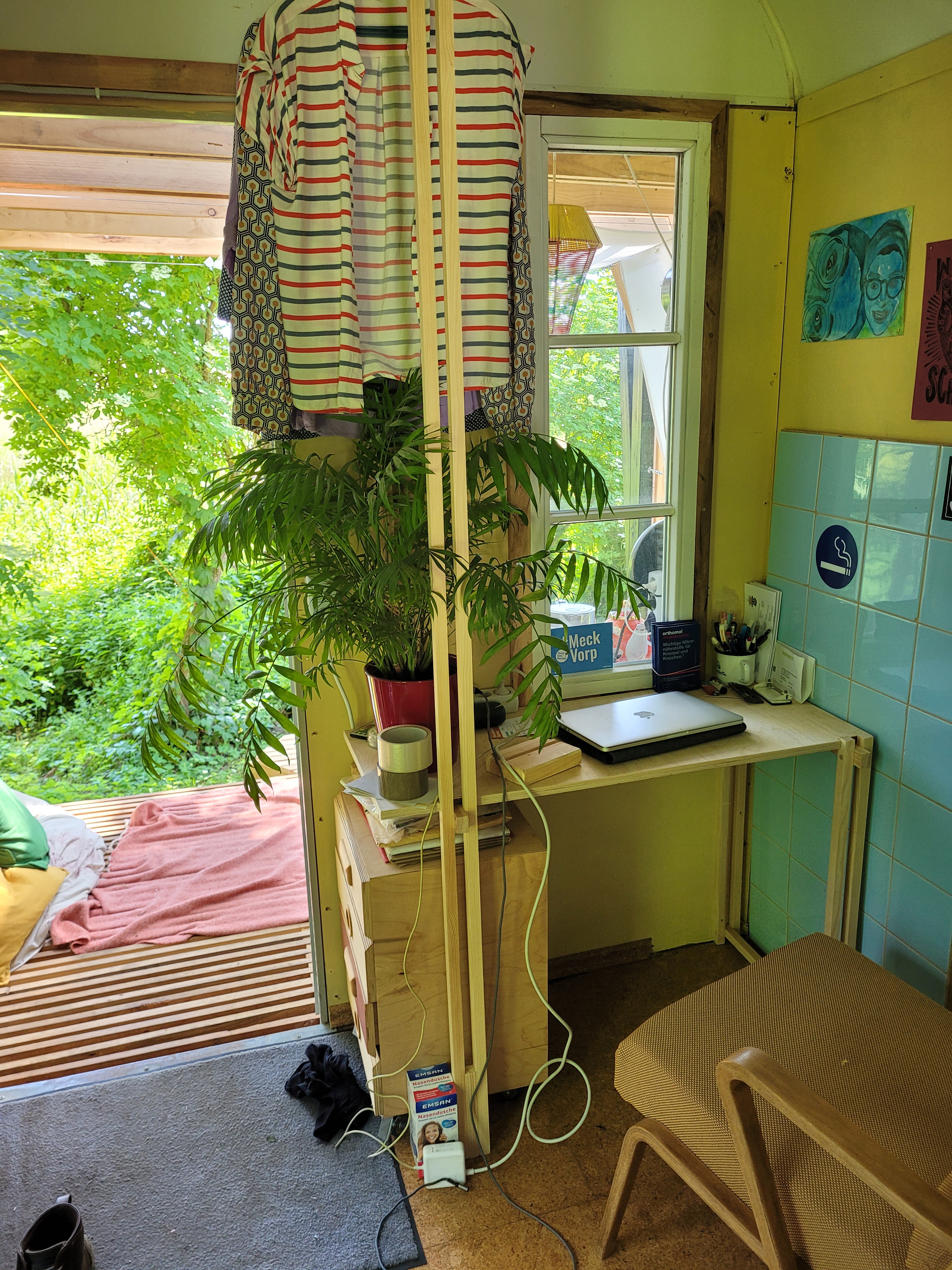
This tiny wagon is a small summer house I built for myself, tucked behind a friend’s home in rural northern Germany. I designed and constructed the full interior and all custom furniture, then added an experimental porch that extends the living space outward into the landscape.
Set just beyond the house, the wagon is oriented entirely away from it, with no windows or recreational areas facing back toward the building. Instead, the layout and openings are aligned with the endless greenery behind the property, making the space feel deeply intimate and visually disconnected from the nearby domestic life.
Inside, every piece of furniture is custom-built to fit the compact envelope, combining storage, seating, and surfaces while keeping the focus on views into nature. Simple, robust details and recyclable materials support a quiet, pared-back atmosphere, turning each element into both a functional object and a small architectural volume that frames the surrounding landscape. • The small footprint heightens a sense of intimacy while carefully positioned windows and built-in seating open the space outward, allowing the user to feel held by the interior yet visually immersed in the surrounding trees, fields, and sky. • Experimental joinery, flexible surfaces, and unconventional alignments of openings test how a tiny structure can feel both secluded and porous, using design to negotiate the threshold between personal retreat and expansive connection to the landscape.
The porch acts as a threshold between shelter and open field. Its lightweight construction and adaptable shading open the wagon toward the greenery while maintaining privacy from the house, creating a quiet outdoor room that stages arrival, reading, and conversation at the edge of the meadow rather than near the village street. • By extending daily activities onto the porch, the project blurs the line between interior and exterior, using controlled openness to turn simple acts like sitting, cooking, or working into moments of direct engagement with weather, light, and changing seasons. • As an experimental add-on, the porch tests how minimal structure, movable elements, and selective enclosure can recalibrate comfort—inviting users to occupy a gradient between fully enclosed room and exposed field, rather than a strict inside–outside divide.
Although physically close to the village, the combination of wagon placement, window orientation, and porch design makes the space feel like a solitary oasis in nature. Together, the interior and porch transform a small plot behind a house into a sequence of secluded spaces that belong more to the surrounding landscape than to the settlement nearby.
Looking for Admissions & Collaborations in Tiny Living
I see these tiny living projects as a starting point for further research into mobile and micro-scale architecture. I am looking to develop this work in dialogue with institutions and collaborators who are interested in experimental housing, material reuse, and spatial narratives in small formats.
If you are part of an admissions committee or a potential collaborator and would like to know more, please feel free to reach out. You can contact me via the Contact page on this site or by email for additional drawings, process documentation, or project proposals.
Reflection
Working across multiple tiny living projects – especially the series of van conversions – has been my most important experimental field. Living with these vans day to day let me test different spatial layouts, storage strategies, and material choices in real use, then feed what I learned directly into the next build. Each conversion became a prototype: a place to observe what worked, what failed, and where comfort, flexibility, and character could be improved. This ongoing cycle of use, reflection, and redesign has been both a major learning process and a deep personal passion. It has taught me to think structurally and narratively at once, where every reuse decision, every color, and every joint becomes part of a larger spatial story. I share this reflection with admissions committees and potential collaborators who are interested in how hands-on making, iterative prototyping, and close collaboration can push tiny living beyond a technical exercise into a field of architectural and social experimentation.
 wastewoooodworx