.. Hi
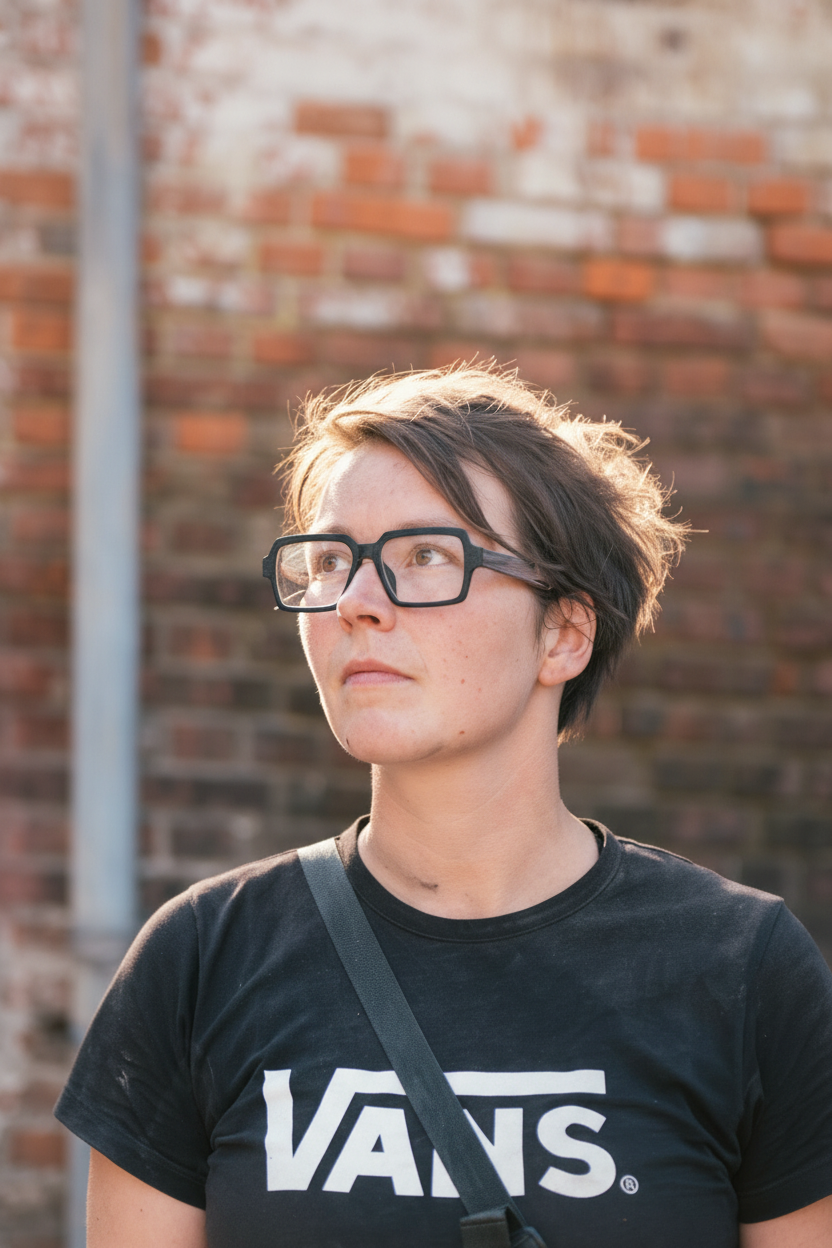
I’m Marieke, a carpenter who fell in love with leftovers.
For years I’ve worked in construction and restoration, learning how buildings behave over time, how materials respond and how to fix things respecting what is already there. That technical backbone quietly supports all the “fun” projects you see on this site.
On construction sites I’ve dealt with clear objectives and real‑world constraints: walls are rarely straight, pipes are never where they say they are and nothing is ever truly “standard.” That taught me to think interconnectedly, anticipate problems before they appear, and adapt details on the fly without losing sight of the bigger picture.
In restoration work I’ve had to respect what already exists—repairing and reinforcing rather than simply replacing. It’s a slower, more careful way of working that’s all about understanding how something was made and how to give it another life. That mindset feeds directly into how I treat reclaimed materials and older structures today.
So when I design and build, you don’t just get a quirky piece or a clever solution—you get something grounded in hard-earned experience. Cheeky concepts are fun, but they still need to pass the “will this survive actual use?” test. That’s where the carpenter brain kicks in.
serious projects
unserious materials
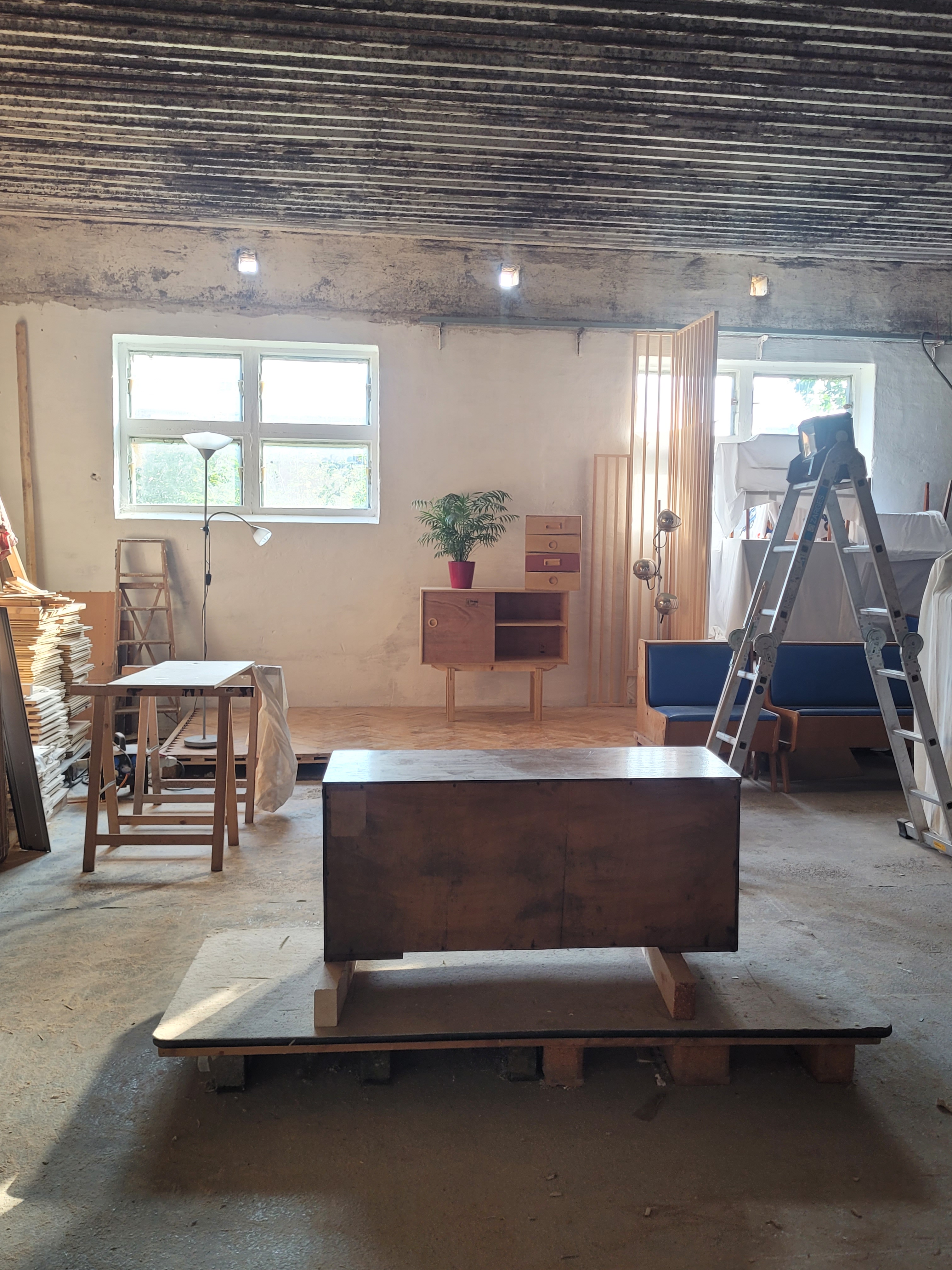
Parallel to the “serious” side of carpentry, I’ve built a world of creative projects: furniture pieces, functional installations and van conversions that turn empty boxes into moving tiny homes. This is where I get to mix solid craftsmanship with playful problem‑solving.
I mostly work with reclaimed and recycled materials—packaging plywood, old panels and whatever else the city quietly discards. I enjoy the puzzle of working with what’s already there: odd dimensions, strange textures, leftover screw holes. Instead of forcing the material to pretend it’s new, I design around its history so it becomes part of the final character.
Van conversions are the more spatial, compact version of this thinking. You’re working in a tiny box with big ambitions: sleep, cook, store, work, exist. Every cut has to earn its place. I design van interiors to be practical first and then layer in warmth and personality through materials, joinery details and bold colors.
These creative projects are where my love for recycled materials and my need for functionality meet in the middle: playful in idea, rigorous in execution.
short projects
long stories
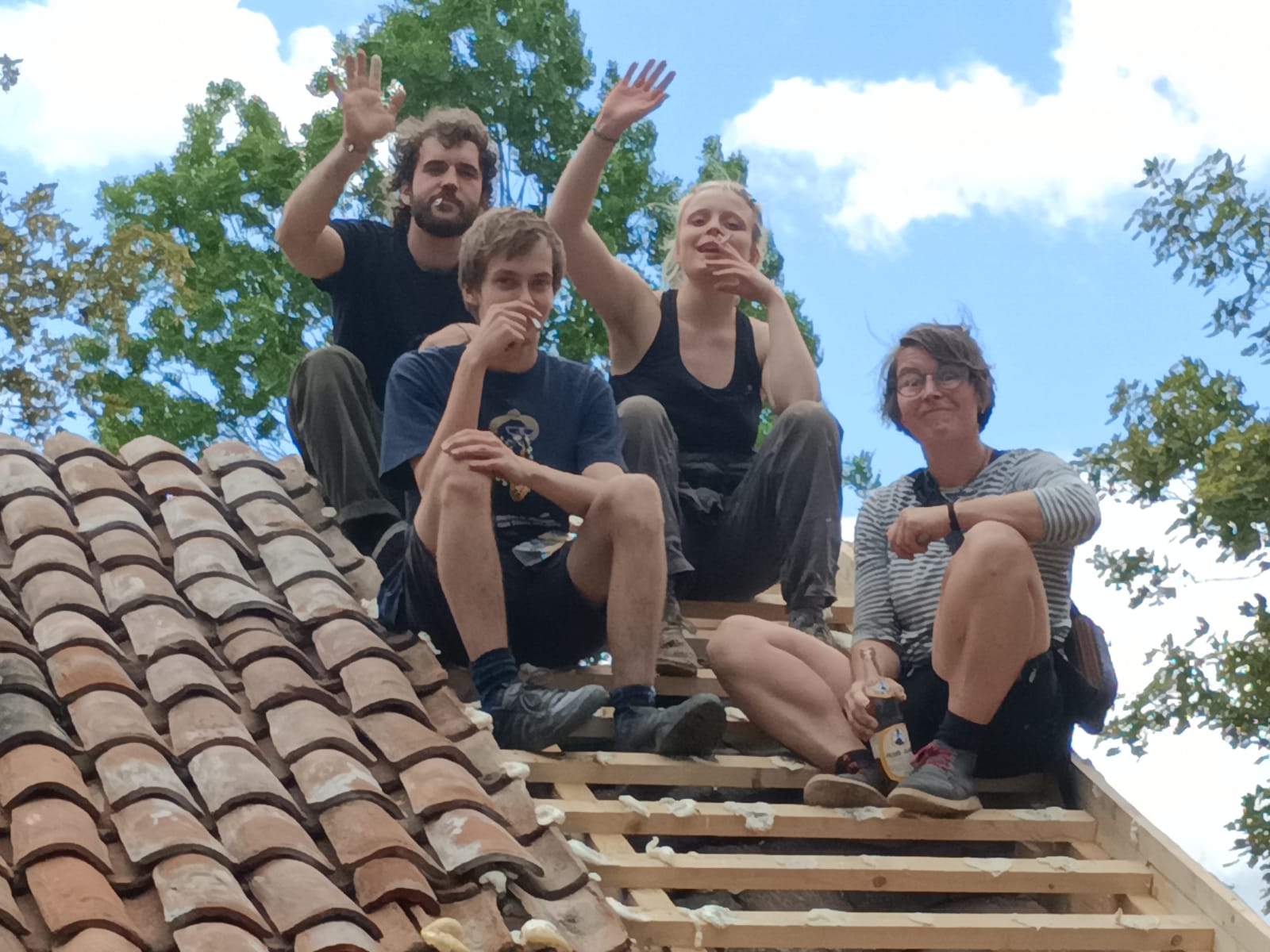
I regularly drop into temporary projects outside the workshop — from chaotic film sets to low‑budget tactical urbanism experiments in public space. On set, we build things that only need to survive the shoot and the occasional actor leaning on them too hard; in the street, we test ideas that might be removed, copied or quietly hacked by the neighbourhood.
Working in these short-lived, collective setups has made me more relaxed about perfection, better at listening, and very good at sharing both tools and credit.
 wastewoooodworx